Alitura Organics
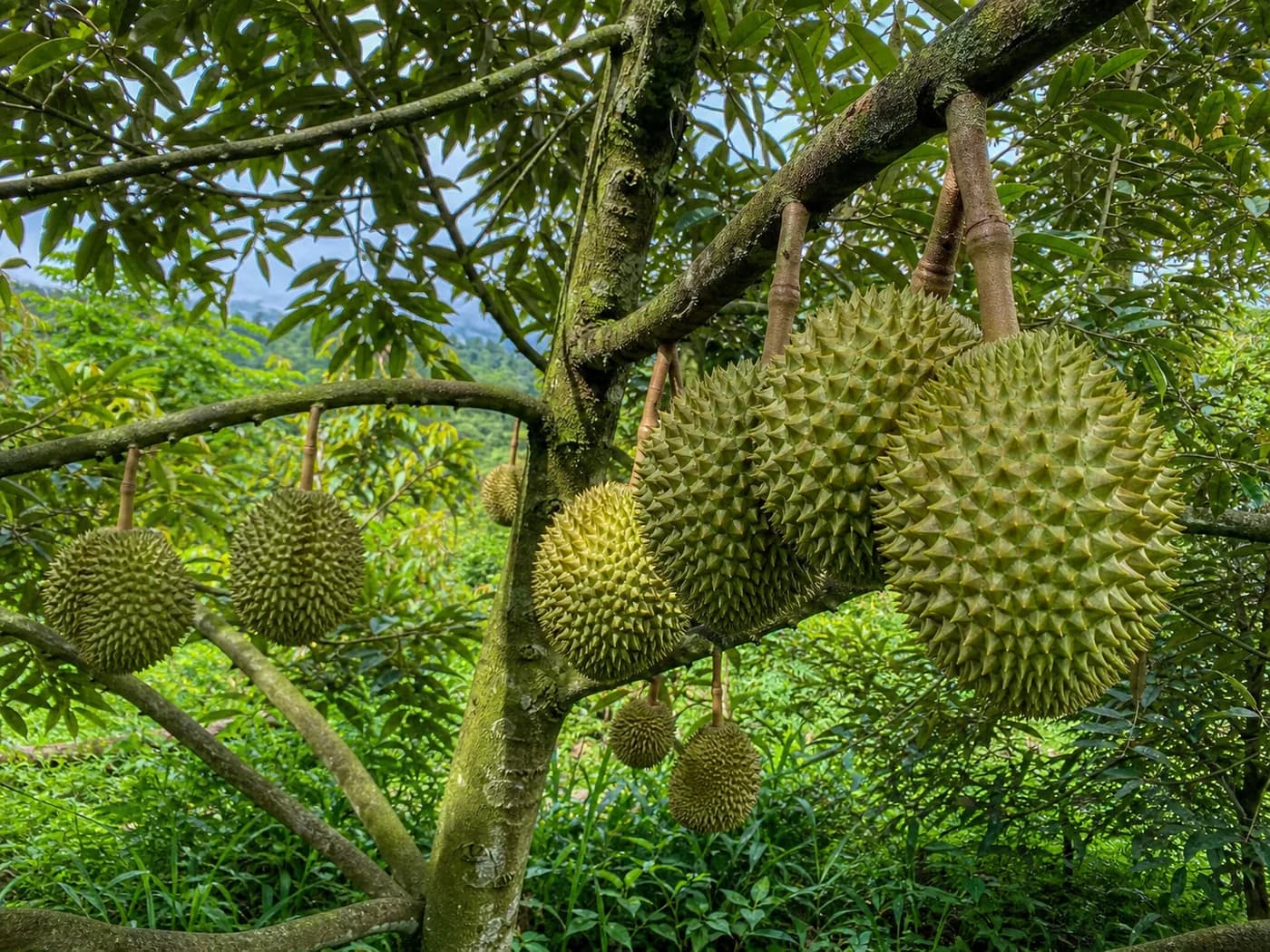
A mature durian tree carrying green spiked fruit in a tropical Indonesian orchardFruit

Crop growing guide

Durian

Durio zibethinus

A deep-rooted, heavy-feeding fruit tree that needs excellent drainage and stage-specific nutrition from establishment through fruit fill.

Durian is a long-lived tropical fruit tree whose harvest is prepared years before the fruit appears. The Indonesian Ministry of Agriculture places its ideal average temperature around 20–30°C, rainfall around 1,500–2,500 mm per year, and soil pH around 6.0–7.0. Deep, crumbly topsoil rich in organic matter is important because durian roots need both steady moisture and oxygen; prolonged waterlogging is a serious risk.

A reliable feeding program follows tree age and canopy cycle. Young trees first build roots and framework, bearing trees shift toward flowering and fruit fill, and every productive tree needs recovery after harvest. Soil and leaf analysis should set the final rate, while organic matter, mulch, and split applications keep the root zone stable.

Ideal growing conditions

Light
Full sun; roughly 60–80% sunlight exposure in the orchard, with young trees protected from extreme heat.
Climate
Humid tropical climate, average 20–30°C; generally below 800 m elevation unless the variety is adapted otherwise.
Water
Even moisture and a dependable water source, but never stagnant water around the roots. Mulch through dry periods.
Soil
Deep (over 1.5 m), loose, organic-rich topsoil with a well-drained loam to sandy-clay subsoil.
Soil pH
6.0–7.0

Nutrition by growth stage

1

Establishment and young trees

Planting through the non-bearing years

Roots, steady canopy growth, organic matter

Build a wide, oxygenated root zone before chasing fast top growth. Mature compost or a balanced organic base belongs around the outer root zone, not against the trunk. Keep nutrition modest and consistent so shoots harden properly.

2

Vegetative flush

After rains begin and after harvest

Balanced NPK, nitrogen, soil biology

Support leaves and branches that will carry the next crop, but avoid excessive nitrogen. Soft, over-lush growth can compete with flower initiation and is more difficult to manage.

3

Pre-flowering

Before expected flower initiation

Phosphorus, potassium, stable moisture

Ease back on nitrogen and make phosphorus and potassium available before demand peaks. Avoid a large fertilizer shock close to flowering; split and water in applications around the drip line.

4

Flowering and fruit fill

From visible flowers until fruit approaches maturity

Potassium, phosphorus, calcium and micronutrient balance

Fruit load increases potassium and water demand. Keep soil moisture even and avoid heavy nitrogen that redirects energy to leaves. Monitor crop load and symptoms before repeating any concentrated input.

5

Post-harvest recovery

Immediately after harvest and pruning

Organic matter, balanced nutrition, root recovery

Replace exported nutrients and rebuild reserves before the next flush. Combine a balanced feed with mulch or mature compost, then water if rain is not expected.

Alitura fertilizer program

Match each product to the crop stage and root zone. Final rates should follow the product label, soil condition, and local agronomic advice.

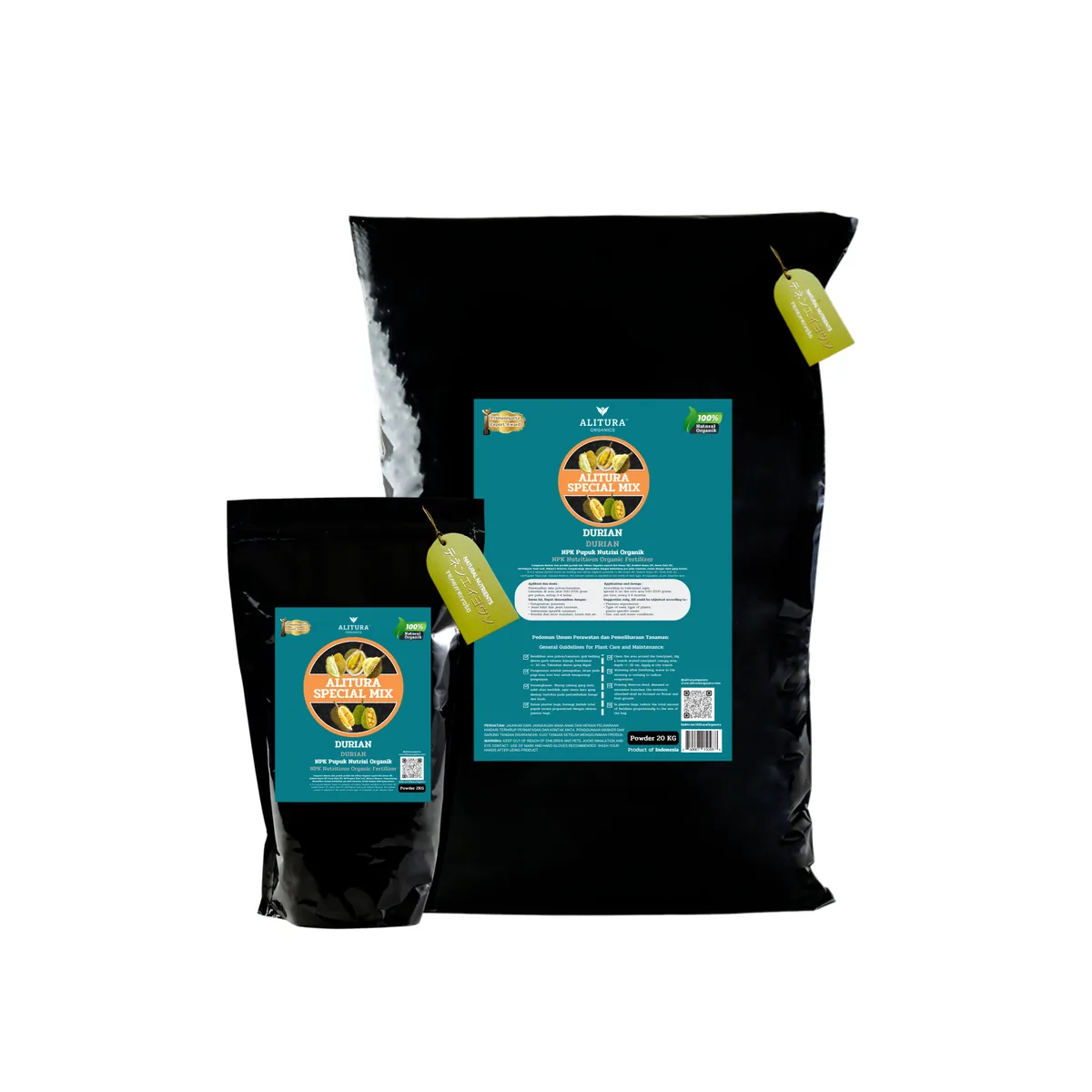
100% ORGANICDurian Special Mix

Durian Special Mix

Special organic blend formulated for fruit plant growth and crop quality.

From IDR 28.000 / Kg(Packaging 20Kg)

Recommended for

Pre-flowering · Flowering and fruit fill

A fruit-crop blend suited to the shift from vegetative growth into flowering and fruit development.

Best timing

Begin before flowering and continue in smaller split applications through fruit development, following the label.

How to apply for this crop

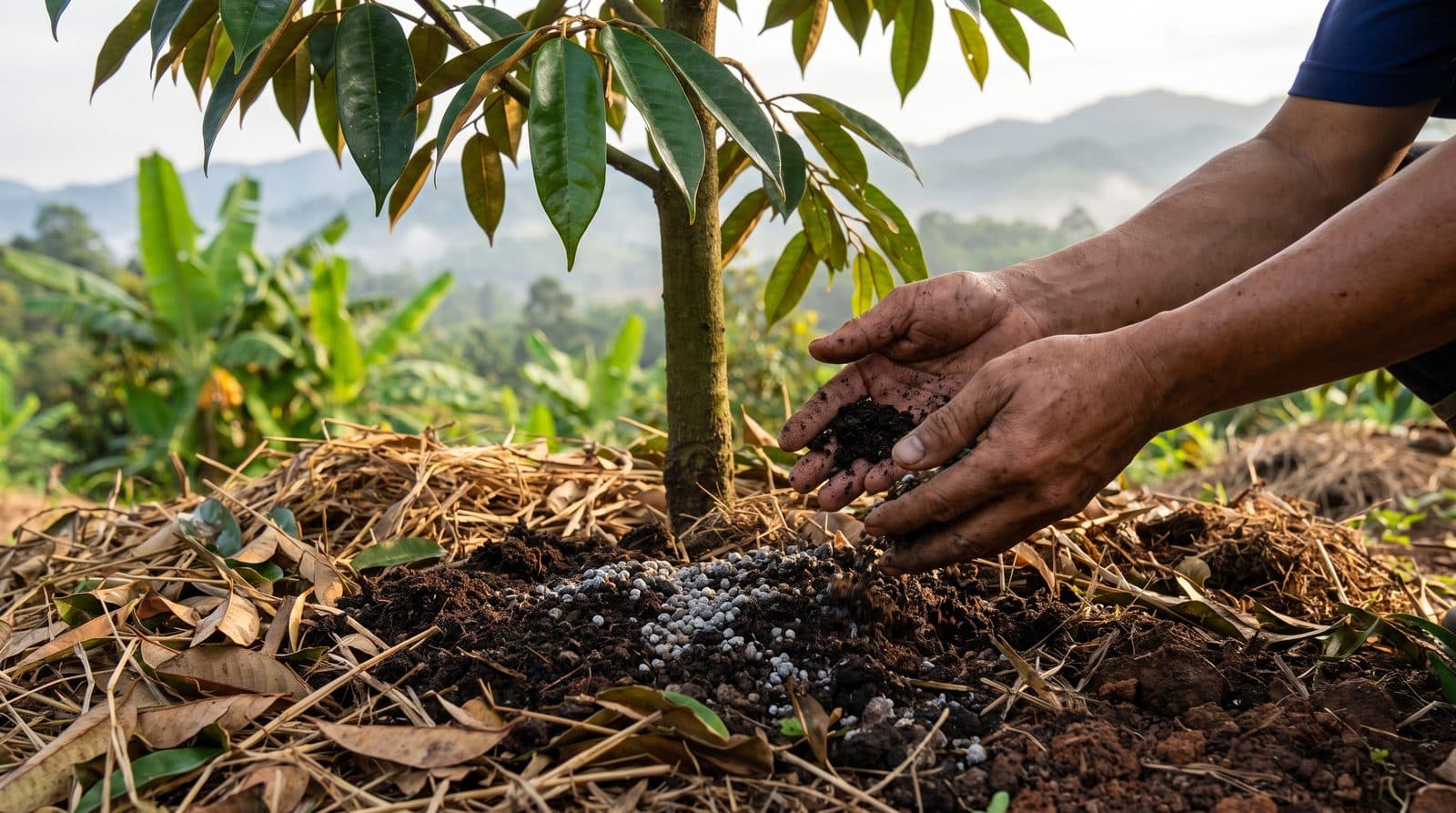
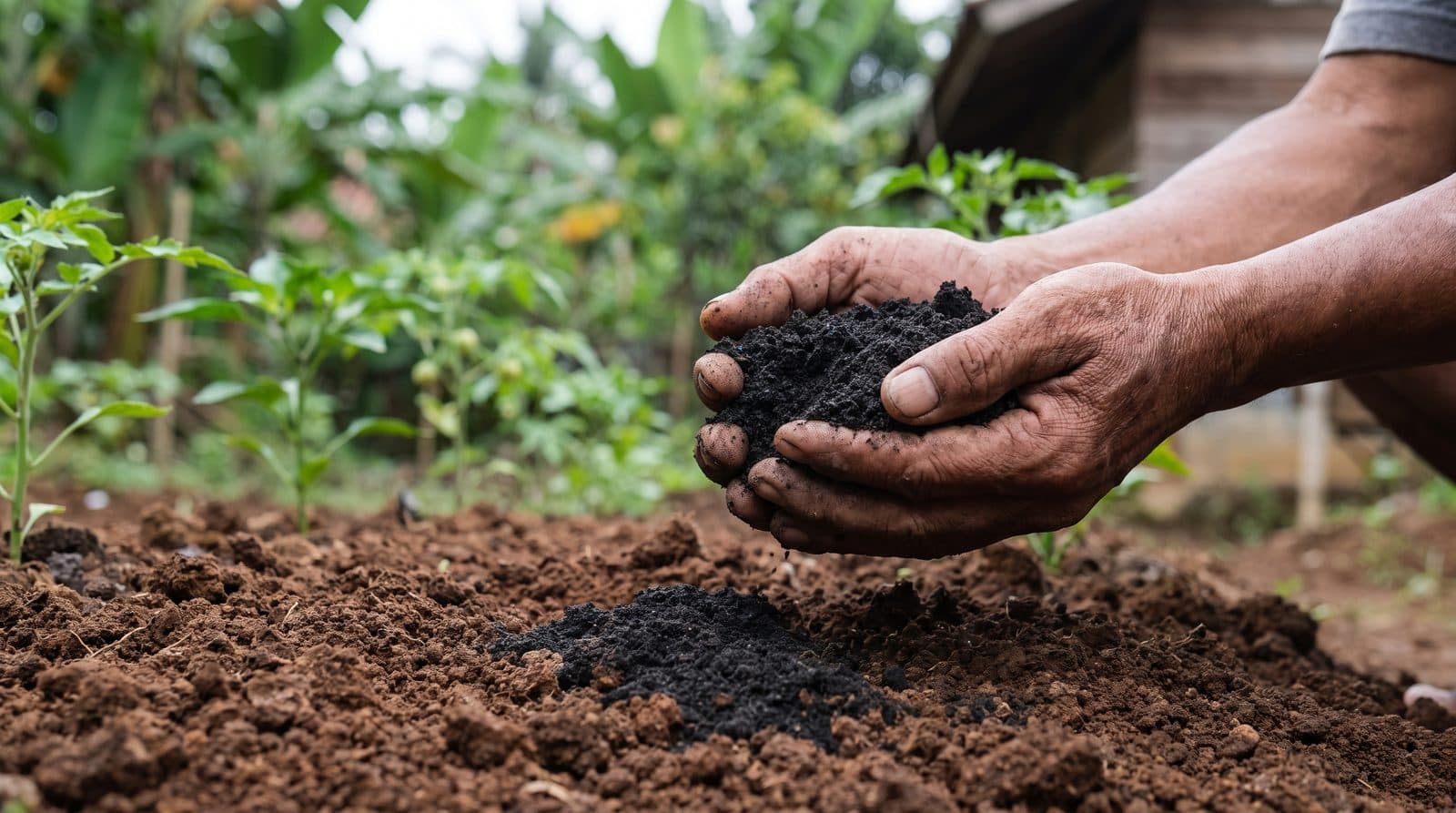
Apply in a broad ring near the outer canopy or drip line, lightly incorporate into moist topsoil, keep clear of the trunk, and water after application.

General product guidance

Apply around the active root zone or mix into the planting media according to the package label, then water lightly. Adjust the amount to plant size, soil condition, and crop stage.

View product and sizes
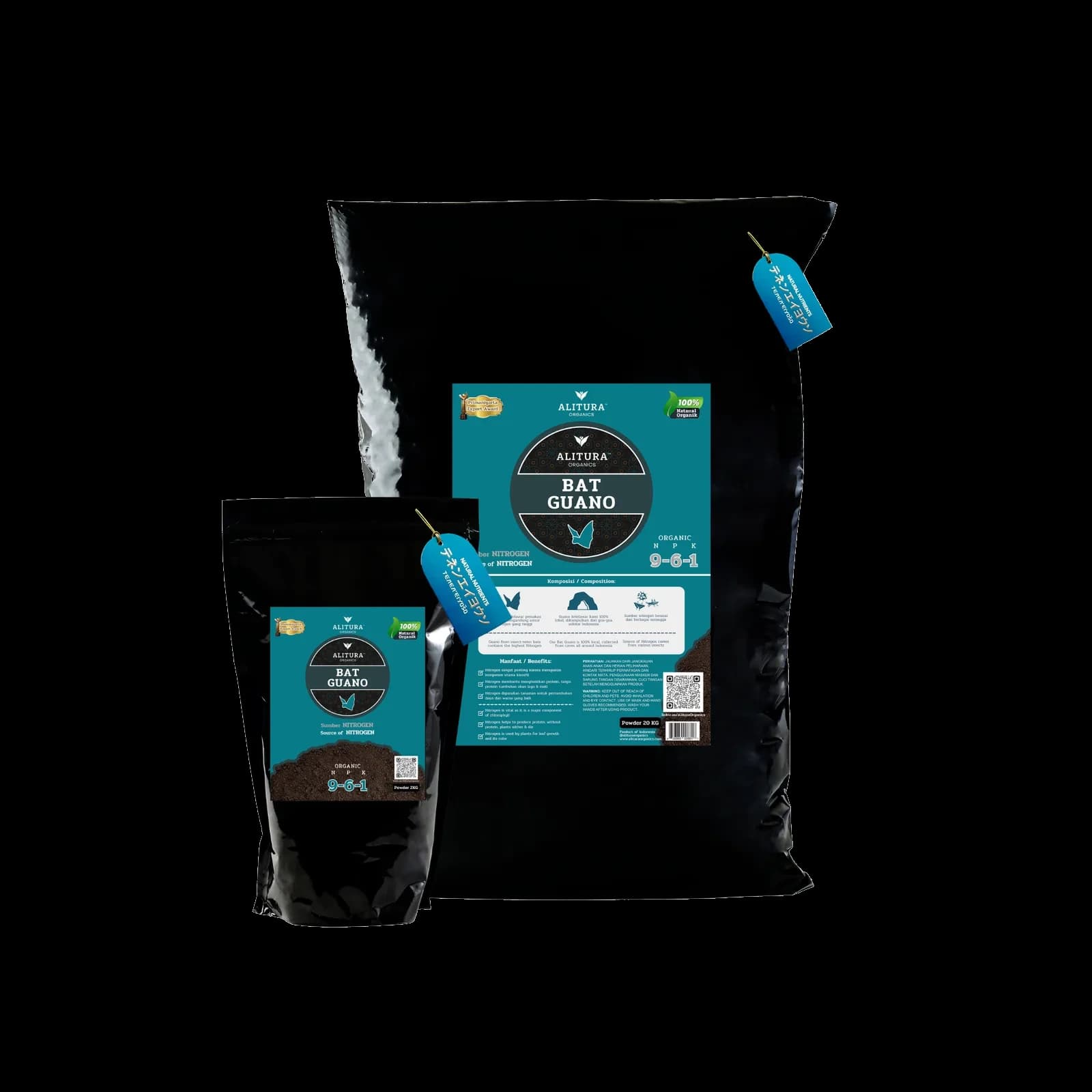
100% ORGANICBat Guano
NPK 9-6-1

Bat Guano

Natural Source of Nitrogen and Phosphorus

From IDR 28.000 / Kg(Packaging 20Kg)

Recommended for

Establishment and young trees · Vegetative flush

Supplies organic nitrogen and phosphorus for early roots, leaves, and branch framework while adding organic material to the root zone.

Best timing

Use lightly during establishment or active vegetative flush; stop pushing nitrogen as flower initiation approaches.

How to apply for this crop

Use the catalogue’s general 50–100 g/m² range only as a starting guide. Spread across the active root area rather than piling at the trunk, lightly mix, and water. Tree age and soil analysis should set the final orchard rate.

General product guidance

For garden beds and pots, mix the powder into the topsoil or planting hole before sowing, then water in well. As a general guide, work a small handful into the soil around each plant, or roughly 50-100 g per square meter, and repeat every 4-6 weeks during the growing season. For liquid feeding, steep the powder in water overnight (about 1-2 tablespoons per liter), strain, and apply to the root zone. Always water after application and adjust the amount to crop size and stage. Dosages are general guidance; confirm rates for your specific crop.

View product and sizes
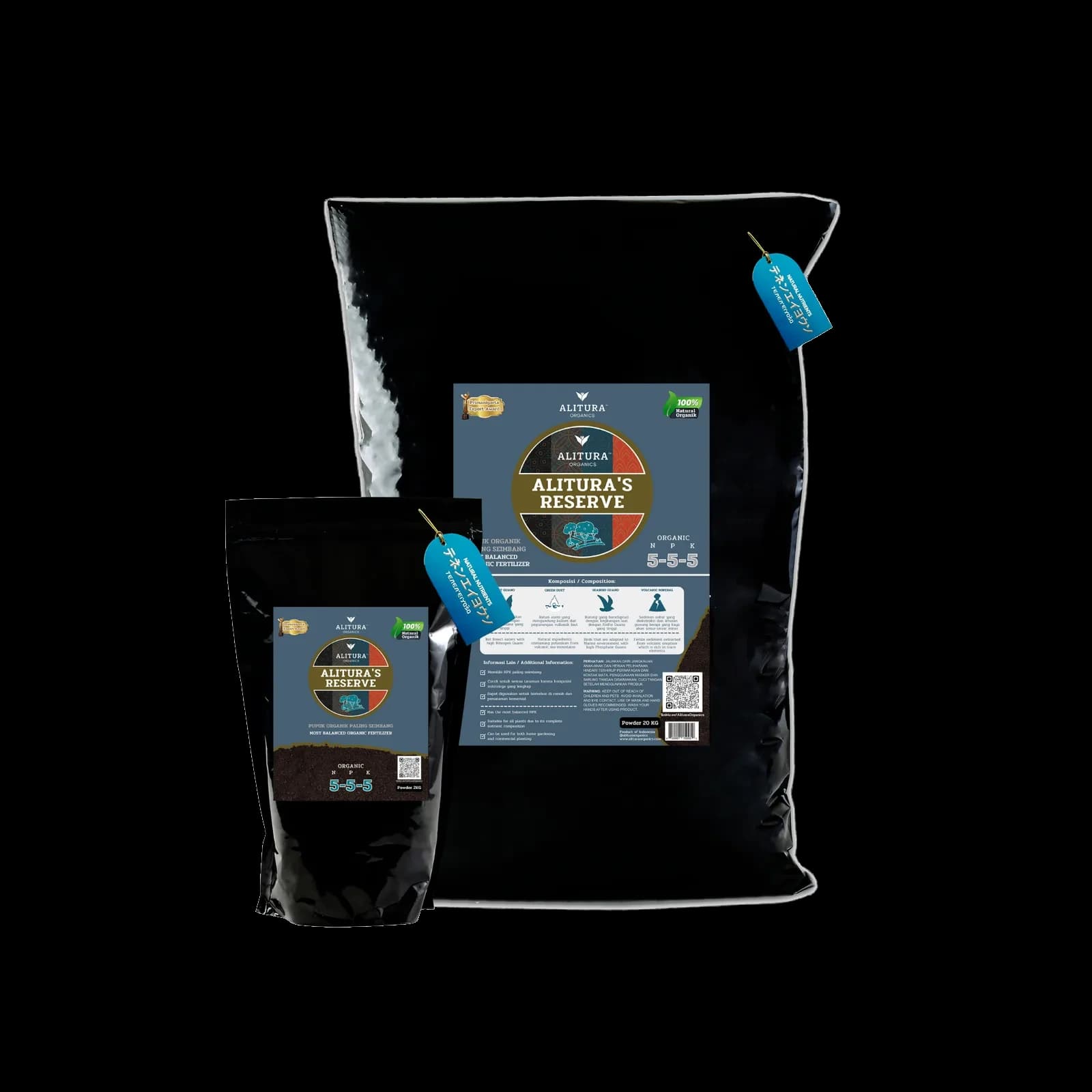
100% ORGANICAlitura's Reserve
NPK 5-5-5

Alitura's Reserve

Most Balanced NPK 5-5-5 Organic Nutritional Fertilizer

From IDR 28.000 / Kg(Packaging 20Kg)

Recommended for

Vegetative flush · Post-harvest recovery

Balanced 5-5-5 nutrition makes it a practical base feed when the tree is rebuilding canopy and reserves.

Best timing

Apply after harvest or at the start of a new vegetative cycle, ideally with mature compost and mulch.

How to apply for this crop

Distribute evenly around the drip line, lightly work into the surface, and water. Split the seasonal amount instead of placing one concentrated mound.

General product guidance

Use Alitura's Reserve as a base feed at planting and as a top-up through the growing season. As a general guide, work a small handful into the soil around each plant or mix it into potting media before planting, then reapply every 4 to 6 weeks during active growth. For garden beds, broadcast evenly over the soil surface and lightly incorporate, then water in well. Powder works best mixed into soil or media. Always water after applying and adjust the amount to plant size and soil condition.

View product and sizes

Mistakes to avoid

  • Placing fertilizer or wet mulch directly against the trunk.
  • Allowing water to stand in the root zone after heavy rain.
  • Using heavy nitrogen close to flowering and producing leaves at the expense of flowers.
  • Copying one fixed dose across young and mature trees without soil or leaf analysis.

Agronomy references