
Organic Fertilizer for Durian: A Grower's Stage-by-Stage Feeding Program

By George Vie
Published 2026-06-30
A practical, field-tested organic feeding program for durian, matching nutrients to each stage from young tree to harvest.
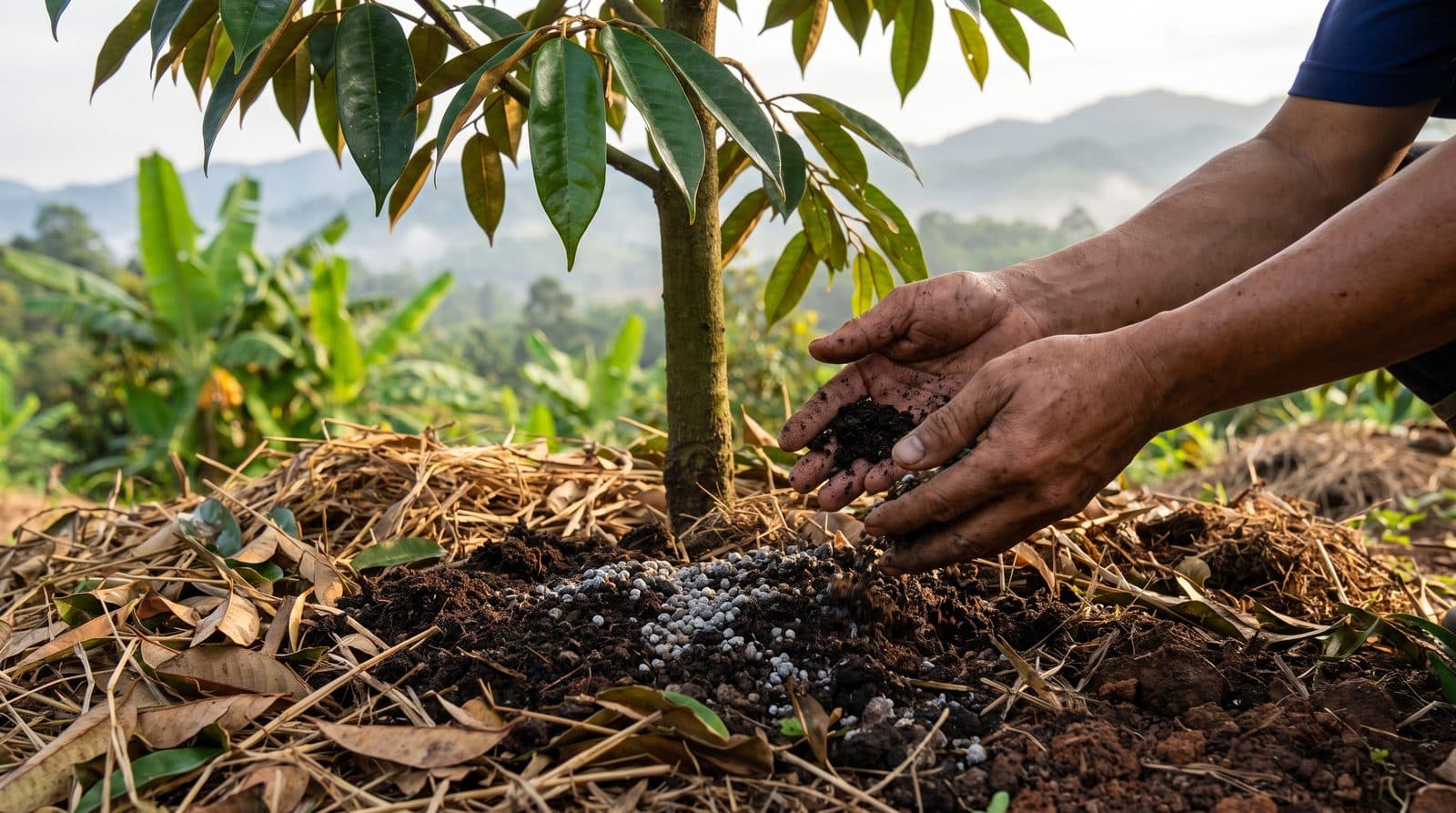
Durian (Durio zibethinus) is a heavy feeder with a long juvenile phase and a demanding fruiting cycle. In my own trees, the seasons when I fed steadily and built the soil first always outperformed the seasons when I leaned on one big dose. That is the heart of an organic program: it works with the tree's rhythm. Leaf flush, flowering, fruit fill, and post-harvest recovery each ask for a different nutrient emphasis, and the soil has to be alive enough to deliver them.
This guide walks through what durian needs at each stage and how to feed it organically, whether you run a small orchard or look after a few trees in the yard.
How Durian Uses Nutrients Through the Year
Durian roots are shallow and sensitive. In practice that means they respond far better to gentle, well-decomposed organic inputs than to concentrated salts, which can scorch feeder roots if you get the dose wrong. Across the season the tree shifts its priorities:
- Vegetative growth (young trees and post-harvest): more nitrogen to build canopy, branches, and root mass.
- Pre-flowering: a balanced supply with adequate phosphorus to support flower-bud initiation.
- Flowering and fruit set: phosphorus and potassium matter more now; avoid pushing soft leafy growth, which competes with flowers.
- Fruit development: potassium demand peaks, supporting sugar loading, flesh quality, and aroma. Calcium, magnesium, and boron help reduce fruit drop and uneven flesh.
Organic matter underpins all of it. Compost and humus hold water, feed soil microbes, and slowly release the trace elements durian quietly depends on. Get the soil right and the feeding schedule becomes easier, not harder.
A Stage-by-Stage Organic Feeding Schedule
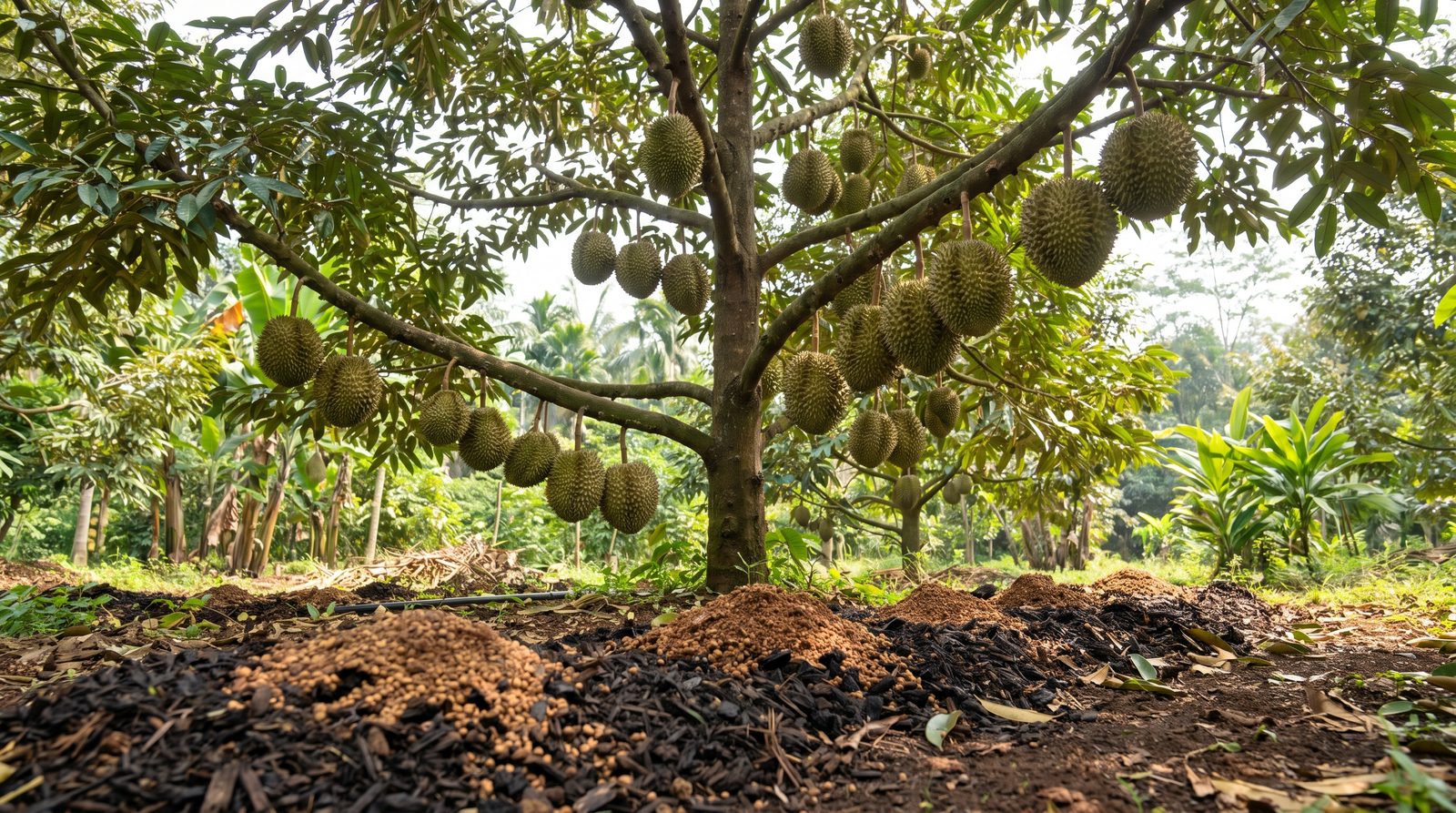
Think in terms of the tree's calendar rather than fixed dates, since climate and variety shift the timing. Treat the quantities below as a general guide and scale them to tree size and your own soil.
1. Young, non-bearing trees (year 1-3). Focus on roots and frame. Spread a few handfuls of well-matured compost or manure around the drip line every 2-3 months, kept a hand's width clear of the trunk. A guano-based input such as Alitura's Bat Guano adds gentle phosphorus and microbial life that encourages root branching. Mulch heavily to protect the shallow roots and hold moisture through dry spells.
2. Mature trees, post-harvest recovery. This is the feeding window I never skip. The tree is exhausted and rebuilding for next season, so a generous base of compost plus a nitrogen-leaning organic amendment drives the strong leaf flush that next year's crop is built on. A complete, biology-rich blend like Alitura's Reserve works well as a foundational soil feed, worked lightly into the mulch layer rather than dug in deep.
3. Pre-flowering. Ease off heavy nitrogen so the tree shifts from leaves to flowers. Keep organic matter up and make sure phosphorus and trace elements are on hand. A fruit-oriented blend such as Fruits Special Mix Organic Fertilizer can come in now to prime the tree for flowering and fruit set; a mineral-rich amendment like Volcanic Mineral is a good way to top up trace elements over the longer term.
4. Flowering through fruit fill. Lift potassium-rich organic inputs to support fruit size, sweetness, and aroma. Continue Fruits Special Mix Organic Fertilizer on a regular cycle, and keep soil moisture even, since swings stress the tree and worsen fruit drop. Adequate calcium and boron, from compost, crushed eggshell, or mineral sources, help the fruit hold and fill evenly.
5. Late fruit fill to harvest. Hold the potassium and avoid fresh nitrogen surges that can dilute flesh quality. Ease off inputs as harvest approaches and let the tree finish the crop.
Choosing and Applying Organic Inputs
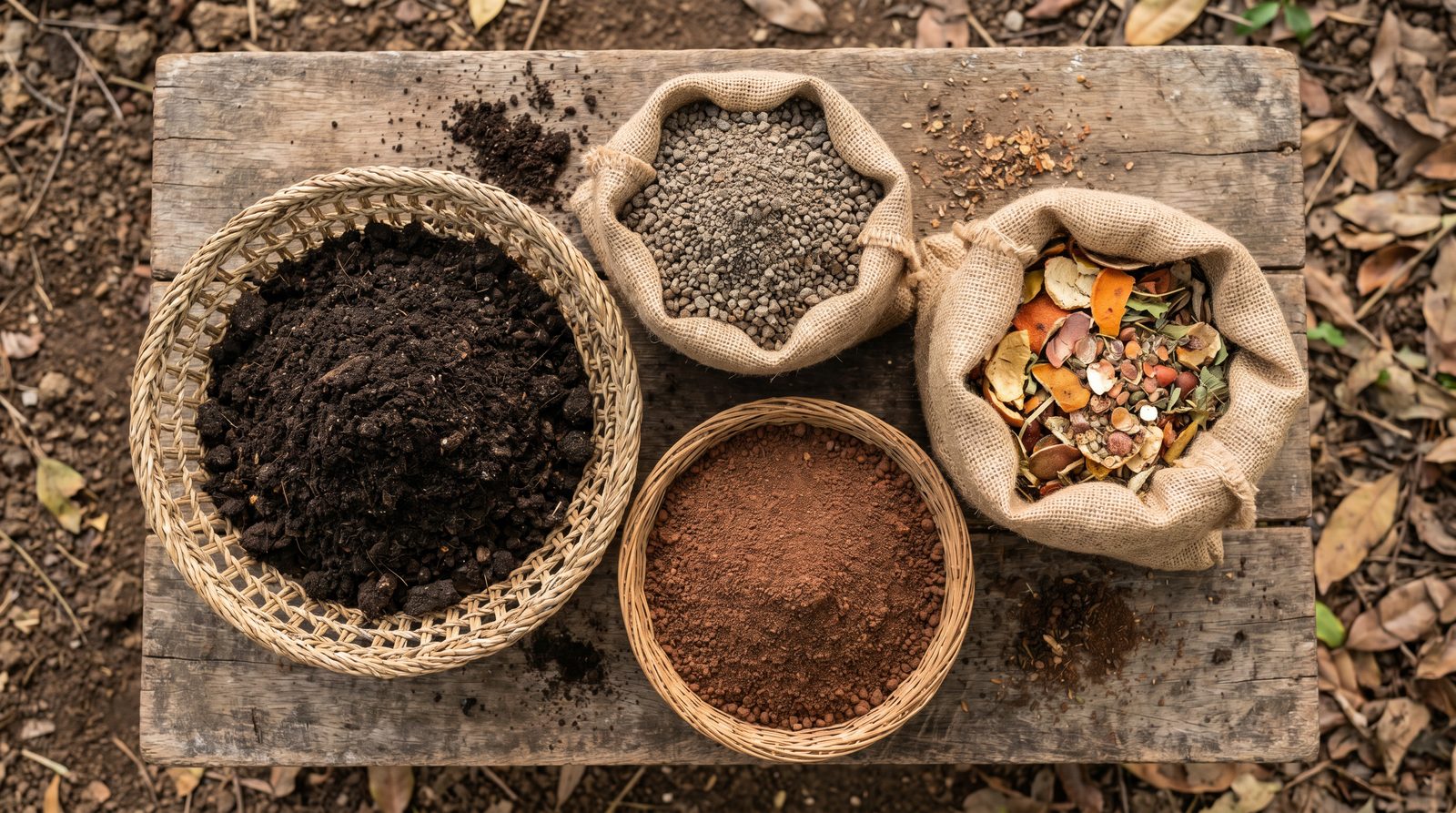
Match the material to the job rather than chasing a single "best" fertilizer:
- Compost and manure are the backbone, building soil structure and slow-release fertility.
- Guano inputs like Bat Guano and Seabird Guano bring concentrated phosphorus and beneficial microbes, useful before flowering and for young roots.
- Balanced organic blends such as Alitura's Reserve suit base feeding and post-harvest recovery.
- Crop-specific blends like Fruits Special Mix Organic Fertilizer align the nutrient ratio with fruiting demands, while a mineral amendment such as Volcanic Mineral rounds out trace elements.
Apply along the drip line where the feeder roots are most active, never piled against the trunk. Water it in afterward and top up the mulch. Because organic nutrients release gradually, consistency across the year beats one large dose every time.
Practical Tips for Healthier Durian
- Read your soil. Most Indonesian durian soils benefit from raising organic matter and correcting acidity gradually with compost and, where needed, agricultural lime.
- Protect the root zone. Keep a thick organic mulch and avoid digging or compaction under the canopy.
- Go easy on young trees. Too much nitrogen delays fruiting and invites soft, pest-prone growth.
- Watch the tree, not just the calendar. Pale leaves, weak flushes, or heavy fruit drop are the tree telling you what to adjust.
- Pair feeding with water management. Durian dislikes both drought and waterlogging, so even moisture pays off.
A durian tree rewards patience. Feed it organically in step with its growth stages, build soil life year after year, and adjust to what the tree shows you, and you support steady canopy health, better fruit set, and richer flavor without forcing the plant. In my experience the healthiest orchards are the ones where the soil, not just the tree, is well fed.
Frequently asked questions
The post-harvest recovery window is the most critical. The tree is depleted and rebuilding for next season, so a generous base of compost plus a nitrogen-leaning organic feed helps drive a strong leaf flush that supports the following year's fruiting.
Compost is the ideal backbone for soil health, but it releases nutrients slowly and unevenly. Pairing it with targeted organic inputs, such as a guano for phosphorus before flowering or a fruit-focused blend during fruit fill, helps match supply to the tree's changing demands.
Fruit drop is often driven by uneven soil moisture, sudden nitrogen surges, or shortages of potassium, calcium, and boron during fruit set. Keep watering steady, avoid fresh high-nitrogen feeds during fruiting, and ensure these nutrients are available through compost and mineral or organic sources.
Apply organic inputs along the drip line, the outer edge of the canopy, where feeder roots are most active. Never pile fertilizer or manure against the trunk, as durian has shallow, sensitive roots and a collar that is prone to rot.
Related products
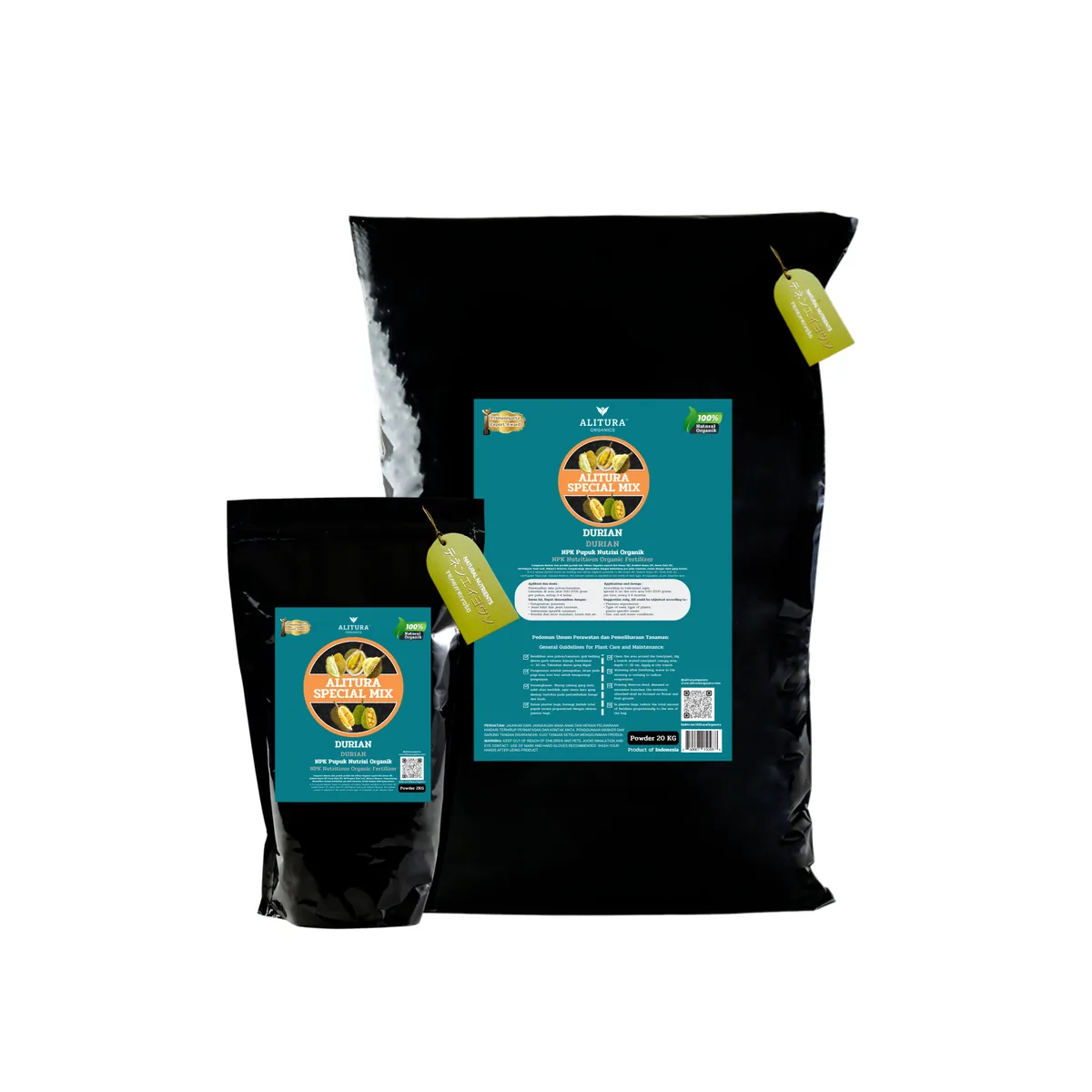
Durian Special Mix
Special organic blend formulated for fruit plant growth and crop quality.
From IDR 28.000 / Kg(Packaging 20Kg)
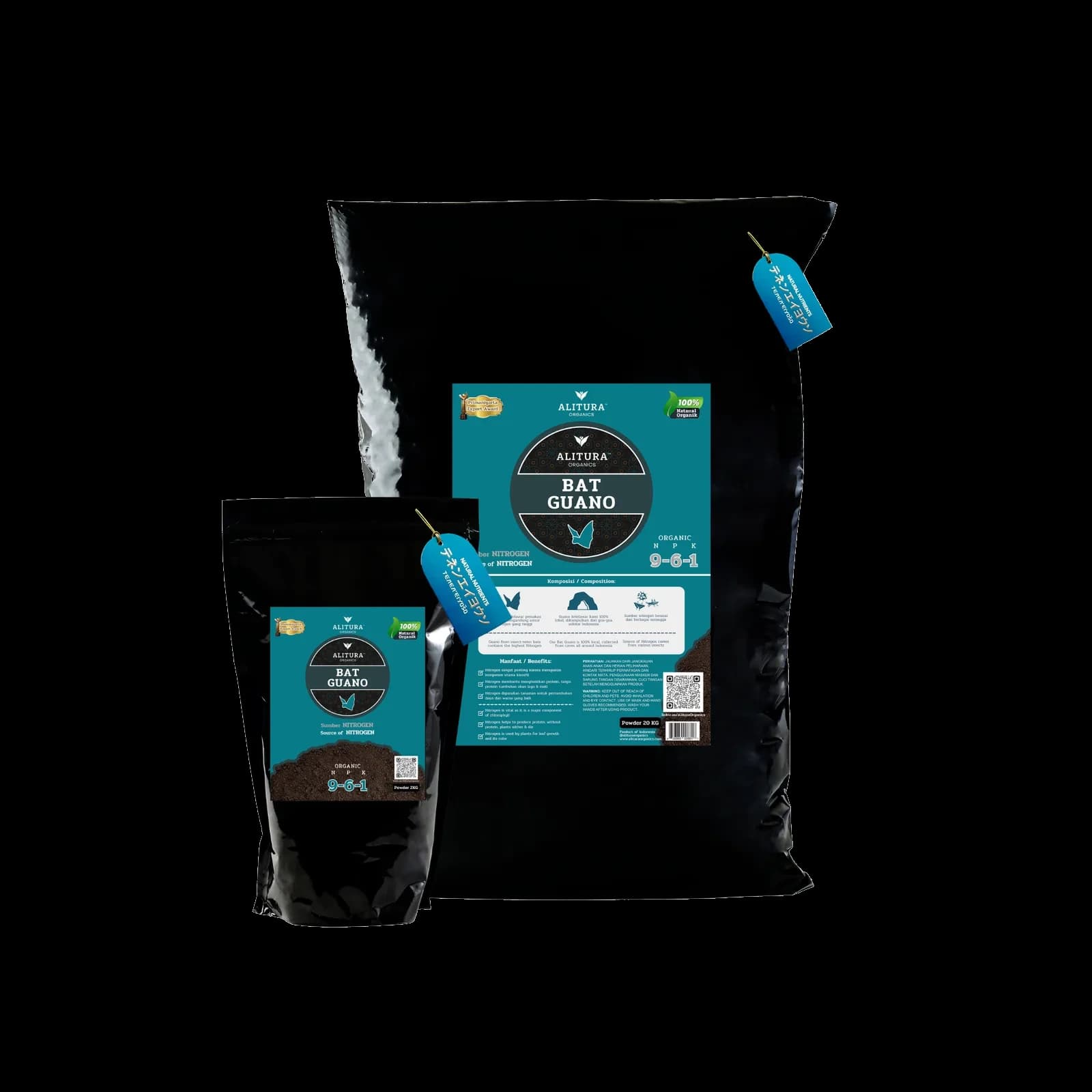
Bat Guano
Natural Source of Nitrogen and Phosphorus
From IDR 28.000 / Kg(Packaging 20Kg)
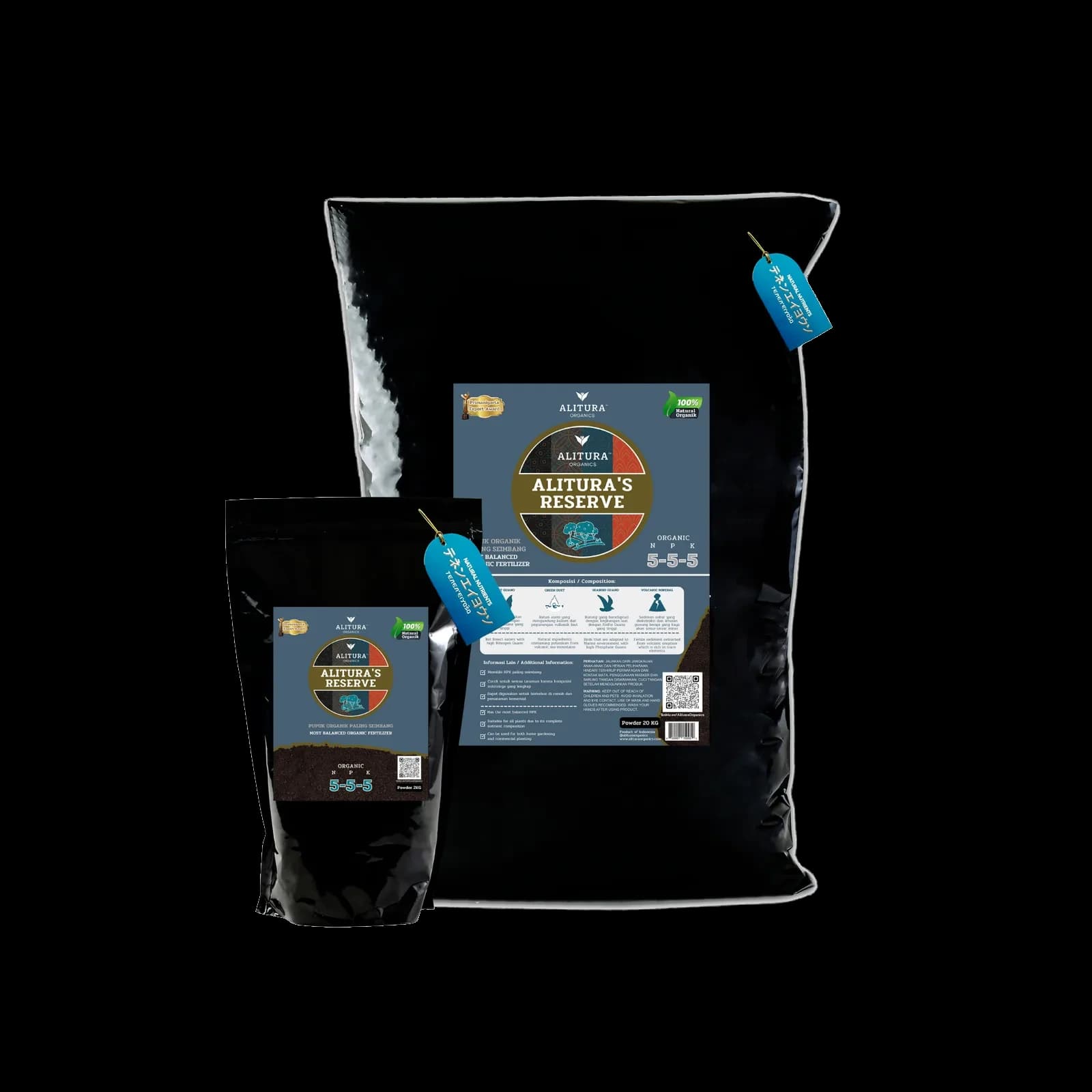
Alitura's Reserve
Most Balanced NPK 5-5-5 Organic Nutritional Fertilizer
From IDR 28.000 / Kg(Packaging 20Kg)
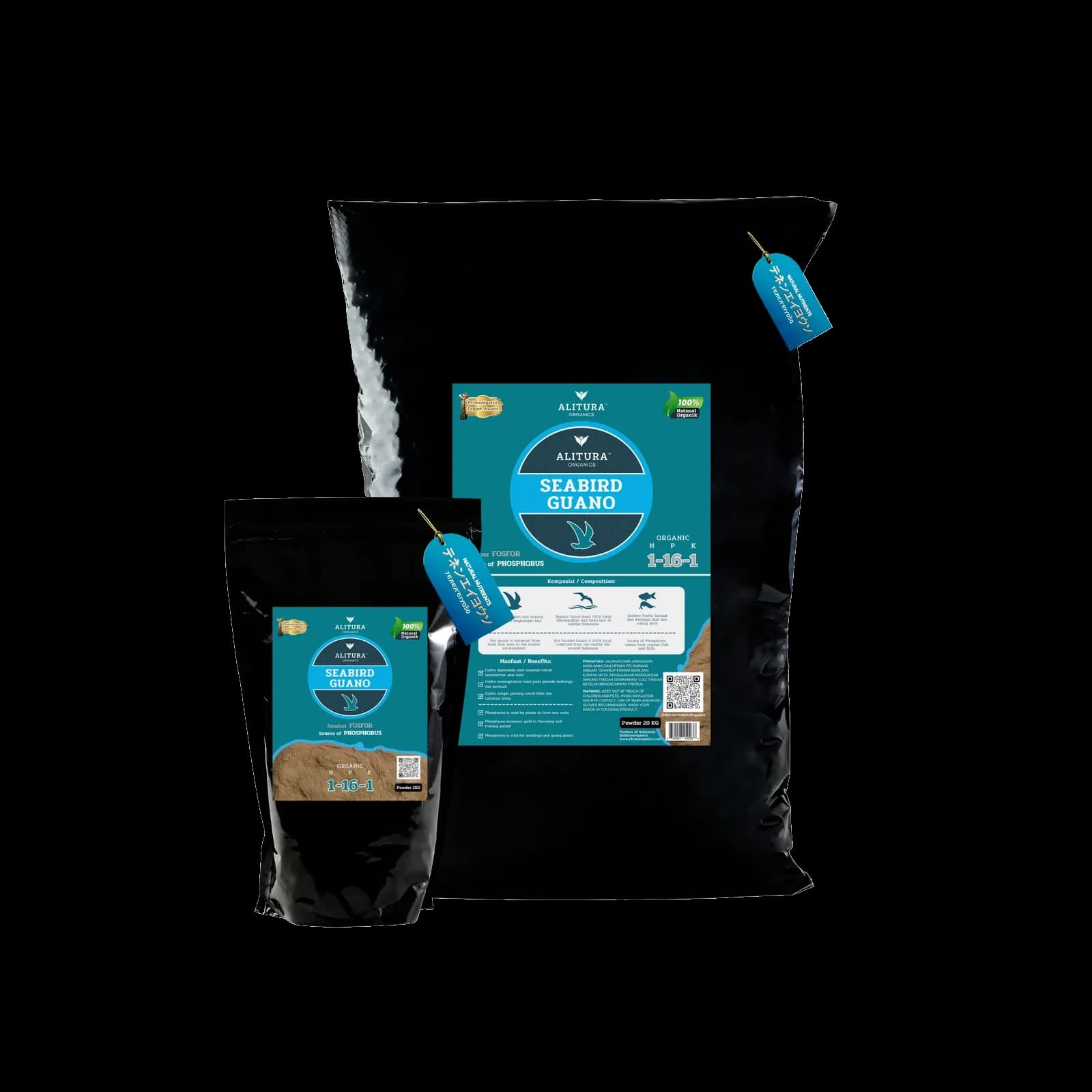
Seabird Guano
Natural Source of Phosphorus
From IDR 27.000 / Kg(Packaging 20Kg)
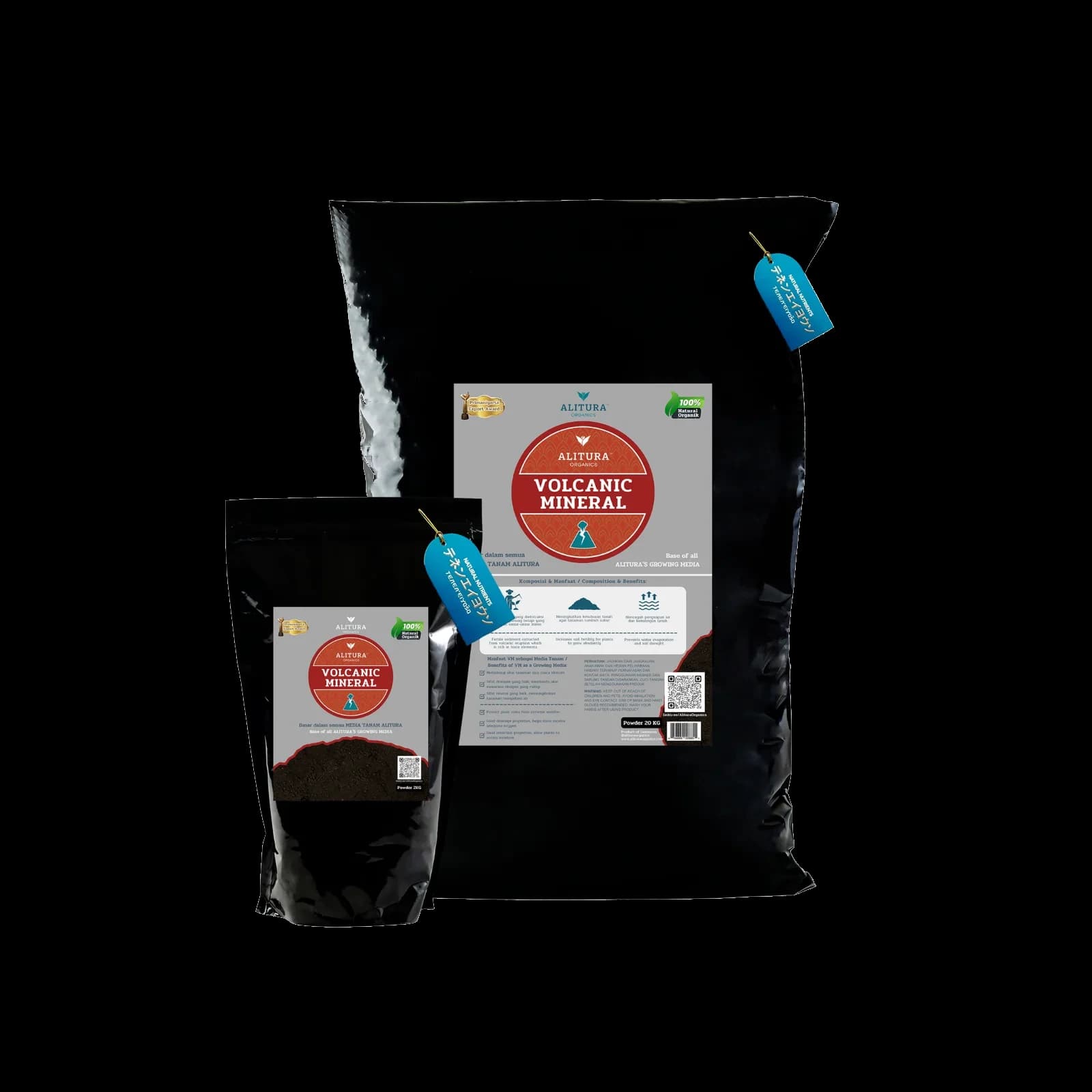
Volcanic Mineral
Organic Carbon, Humic Acid
From IDR 27.000 / Kg(Packaging 20Kg)