Alitura Organics
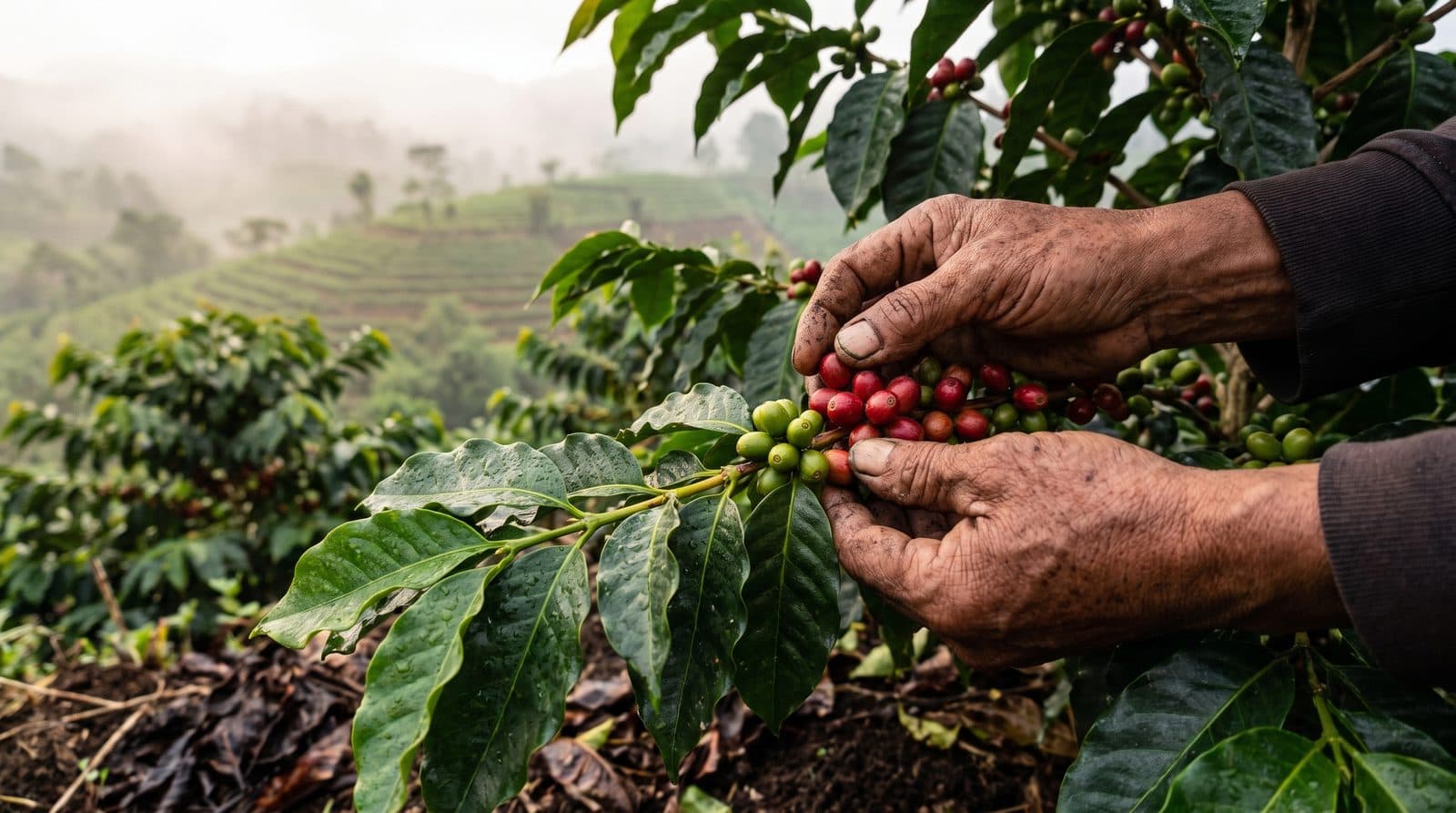
Ripe red coffee cherries and green leaves on a coffee branch in an Indonesian highland plantationPlantation Crops

Crop growing guide

Coffee

Coffea arabica / Coffea canephora

A perennial plantation crop whose ideal climate differs between Arabica and Robusta, but always needs deep, well-drained soil and seasonal feeding.

Coffee nutrition cannot be separated from species and site. Indonesian guidance places Arabica broadly in cooler highlands and Robusta in warmer lower elevations. Both prefer deep, crumbly, well-drained soil around pH 5.5–6.5 with useful organic matter. Waterlogging restricts roots, while a controlled drier interval helps synchronize flower initiation before rain triggers bloom.

Coffee carries the next harvest on healthy branches produced earlier in the cycle. Feeding therefore moves from post-harvest recovery and vegetative flush, to pre-flowering phosphorus, then potassium and balanced nutrition during cherry development. Soil and leaf analysis are especially valuable on established plantations because exported nutrients, shade, rainfall, and expected yield vary block by block.

Ideal growing conditions

Light
Bright filtered light to full sun with managed shade; shade is valuable against heat, wind, and moisture stress.
Climate
Arabica: roughly 15–25°C at 1,000–2,000 m. Robusta: roughly 21–24°C at 100–600 m; match variety to local elevation.
Water
About 1,250–2,500 mm annual rainfall is broadly suitable, with good drainage and a short drier period that supports synchronized flowering.
Soil
More than 1 m effective depth, loamy and crumbly topsoil, good drainage, and organic matter above roughly 3.5% where achievable.
Soil pH
5.5–6.5

Nutrition by growth stage

1

Seedling and establishment

Nursery through the first field years

Roots, balanced growth, organic matter

Use mature organic matter and light, split nutrition. Young coffee roots are easily stressed by concentrated fertilizer and stagnant water, so prioritize drainage and a stable root-zone environment.

2

Post-harvest recovery

After harvest and maintenance pruning

Nitrogen, balanced NPK, branch renewal

Rebuild reserves and support the new branches that will bear a later crop. Pair balanced fertilizer with compost and retained leaf litter rather than relying on one large dose.

3

Flower-bud development

During the drier interval before flowering rain

Phosphorus, balanced canopy, moisture timing

Prepare roots and reproductive growth without forcing soft new leaves. Apply phosphorus early enough to integrate into the root zone, then avoid disturbing the crop as flowering begins.

4

Cherry development and filling

After fruit set through ripening

Potassium, balanced NPK, even water supply

Developing cherries draw strongly on potassium and overall nutrient reserves. Split feeding, keep mulch in place, and avoid large swings between dry and saturated soil.

Alitura fertilizer program

Match each product to the crop stage and root zone. Final rates should follow the product label, soil condition, and local agronomic advice.

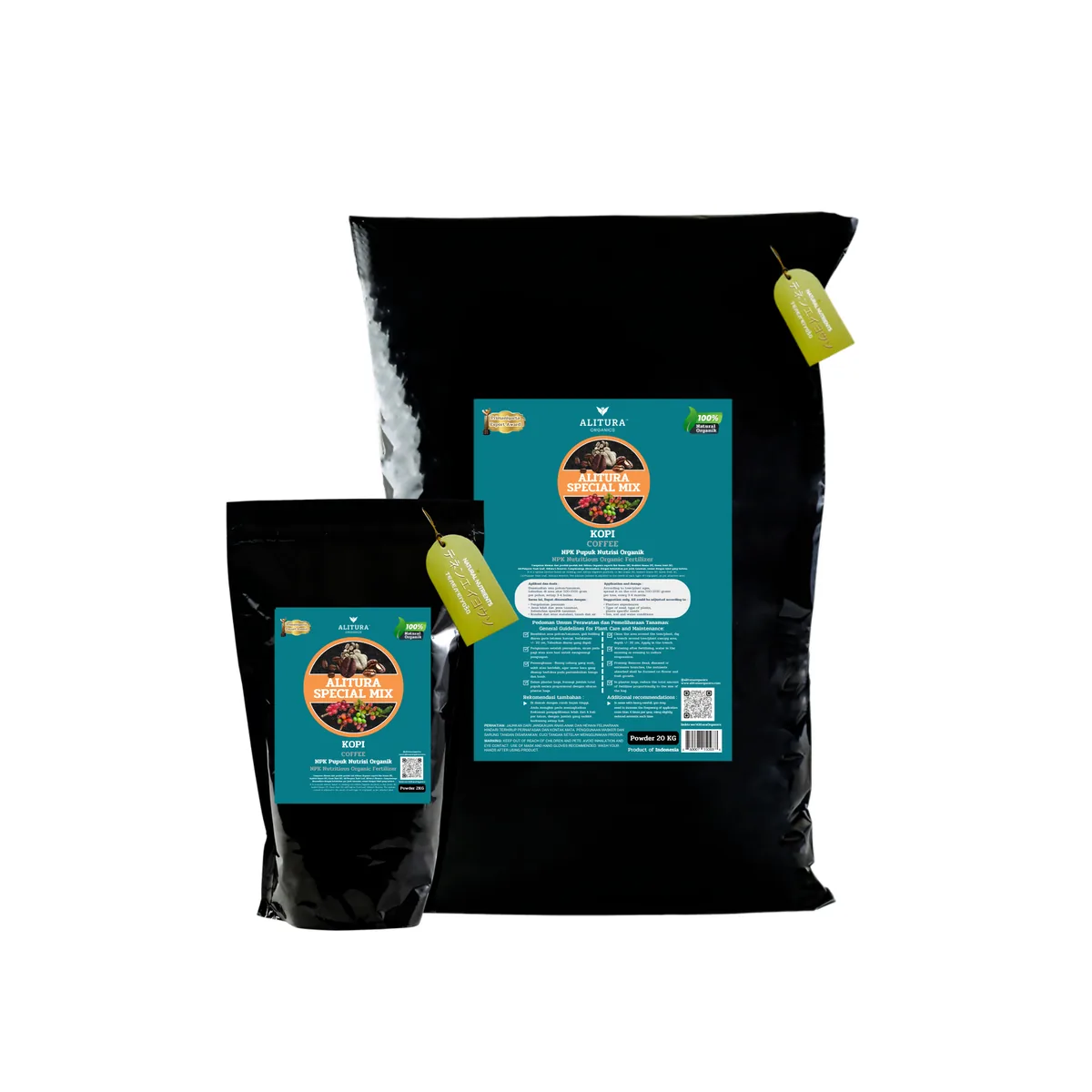
100% ORGANICCoffee Special Mix

Coffee Special Mix

Special organic blend formulated for plantation crop growth and crop quality.

From IDR 28.000 / Kg(Packaging 20Kg)

Recommended for

Post-harvest recovery · Cherry development and filling

A crop-oriented blend for coffee and other aromatic plantation crops, supporting balanced seasonal nutrition.

Best timing

Use in split applications after harvest and again during active cherry development, following the product label.

How to apply for this crop

Spread under the productive canopy toward the drip line, keep away from the stem, lightly incorporate into moist soil, and water when rain is not imminent.

General product guidance

Apply around the active root zone or mix into the planting media according to the package label, then water lightly. Adjust the amount to plant size, soil condition, and crop stage.

View product and sizes
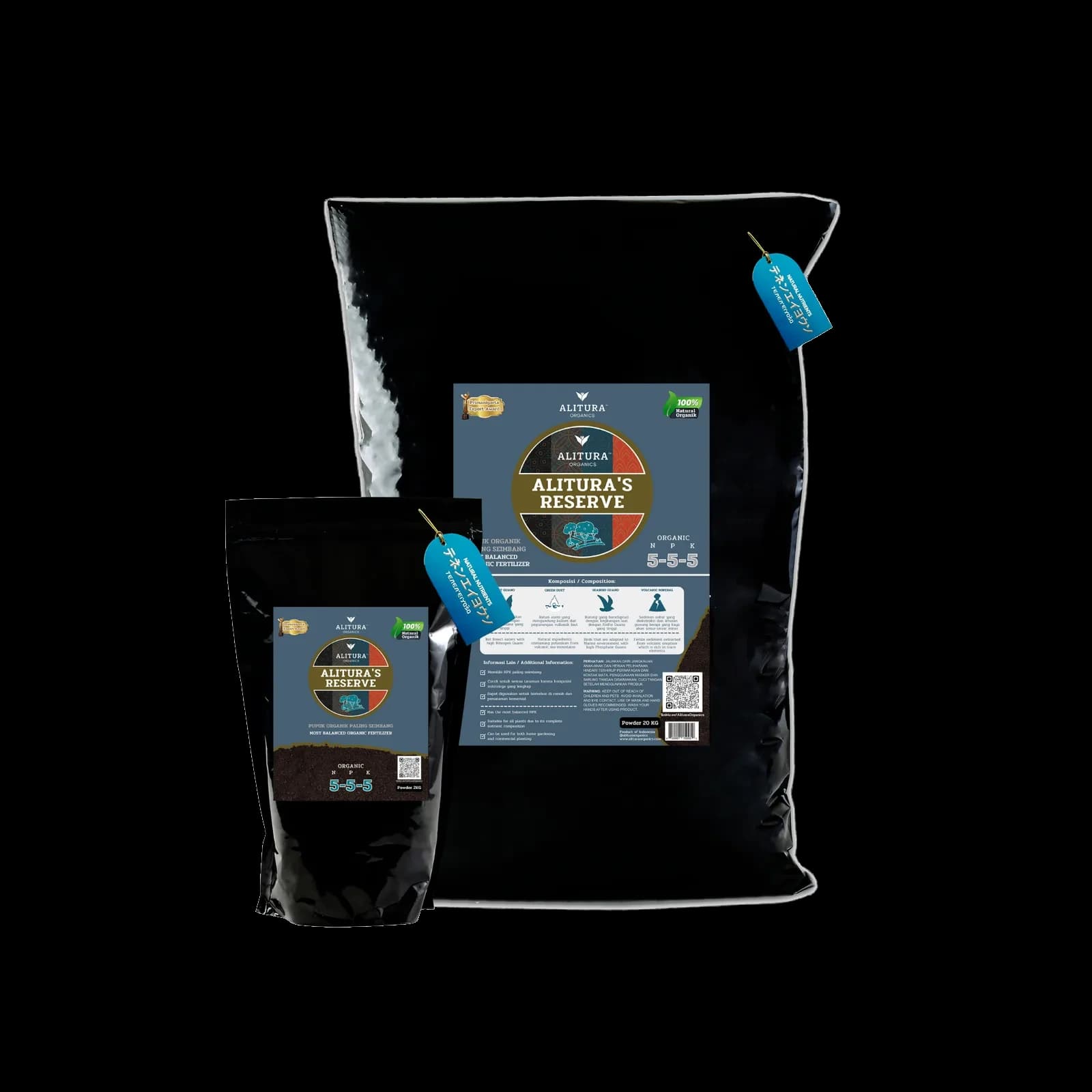
100% ORGANICAlitura's Reserve
NPK 5-5-5

Alitura's Reserve

Most Balanced NPK 5-5-5 Organic Nutritional Fertilizer

From IDR 28.000 / Kg(Packaging 20Kg)

Recommended for

Seedling and establishment · Post-harvest recovery

Balanced 5-5-5 nutrition is useful as a foundation when young plants establish or bearing trees rebuild after harvest.

Best timing

Apply at establishment in light amounts, then after harvest or at the start of the rainy-season flush for mature trees.

How to apply for this crop

Distribute in a broad ring over the active feeder-root area. Split the planned amount and combine with compost or leaf mulch for steadier soil conditions.

General product guidance

Use Alitura's Reserve as a base feed at planting and as a top-up through the growing season. As a general guide, work a small handful into the soil around each plant or mix it into potting media before planting, then reapply every 4 to 6 weeks during active growth. For garden beds, broadcast evenly over the soil surface and lightly incorporate, then water in well. Powder works best mixed into soil or media. Always water after applying and adjust the amount to plant size and soil condition.

View product and sizes
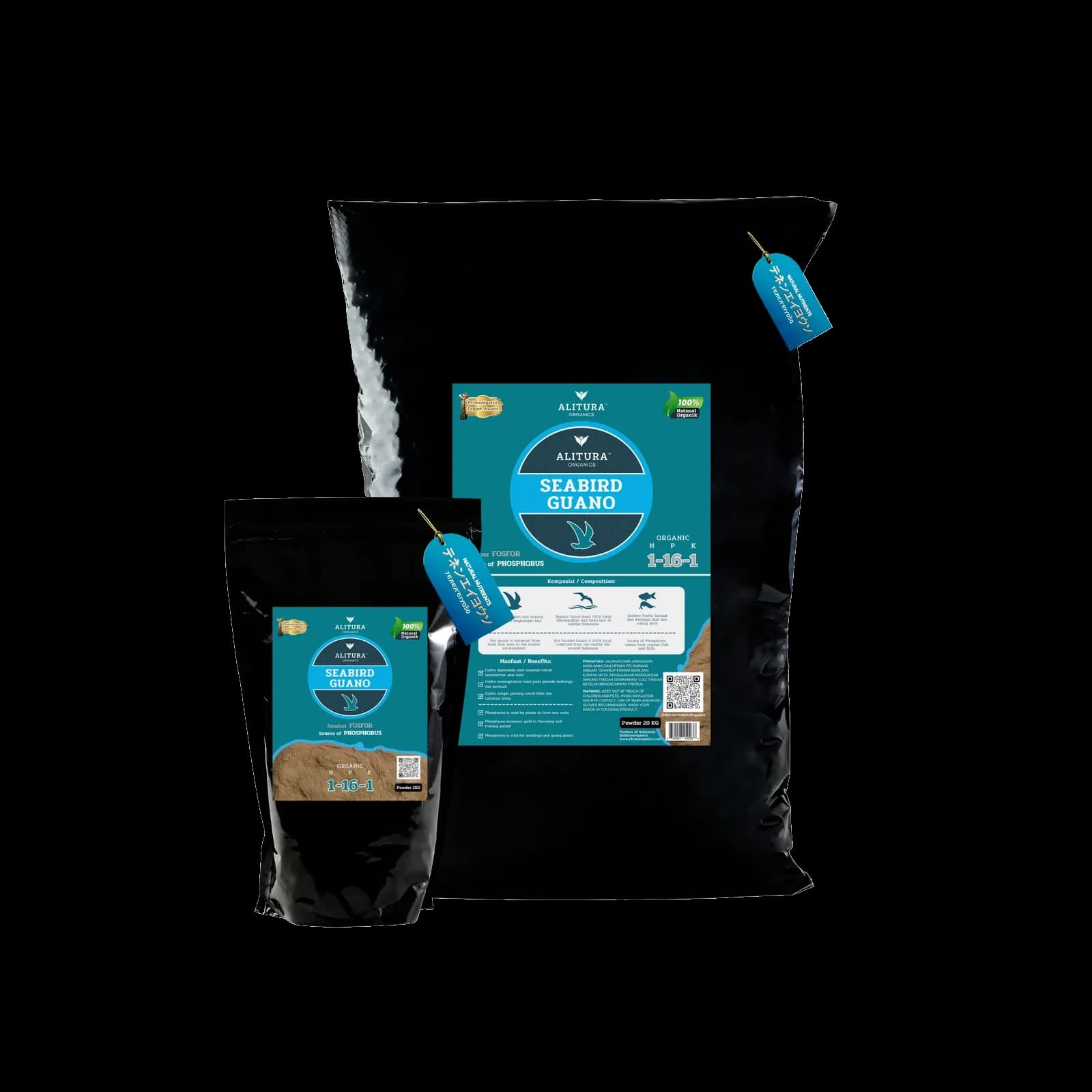
100% ORGANICSeabird Guano
NPK 1-16-1

Seabird Guano

Natural Source of Phosphorus

From IDR 27.000 / Kg(Packaging 20Kg)

Recommended for

Flower-bud development

Its high natural phosphorus suits root support and the reproductive transition before bloom.

Best timing

Apply well before expected flowering, not as a rescue dose after flowers are already open.

How to apply for this crop

Side-dress around the feeder-root zone, lightly mix into topsoil, and water. Use a modest amount and determine the field rate from soil status and the product label.

General product guidance

Work Seabird Guano into the soil or planting hole before sowing or transplanting, mixing it well around the root zone. For established plants, side-dress around the base and lightly incorporate into the topsoil, then water in. It is most valuable at the start of the flowering and fruiting stages, when phosphorus demand peaks. The powder form mixes easily into soil and potting media. As a general guide, apply a modest handful per plant or per planting hole and scale with plant size; always confirm exact rates for your crop and soil. Because the phosphorus releases slowly, it can be applied as a base fertilizer well ahead of peak demand.

View product and sizes

Mistakes to avoid

  • Treating Arabica and Robusta as if they require the same temperature and elevation.
  • Applying fertilizer against the stem instead of across the feeder-root zone.
  • Pushing excessive nitrogen before flowering and creating leaves instead of a balanced crop.
  • Ignoring drainage, shade, and soil pH while trying to correct every symptom with fertilizer.

Agronomy references