
Organic Fertilizer for Coffee: A Grower's Guide to Healthy Growth, Flowering, and Cherry Yield

By George Vie
Published 2026-06-30
A hands-on organic feeding guide for coffee, matching natural inputs to each stage: soil-building, flowering, and cherry development.
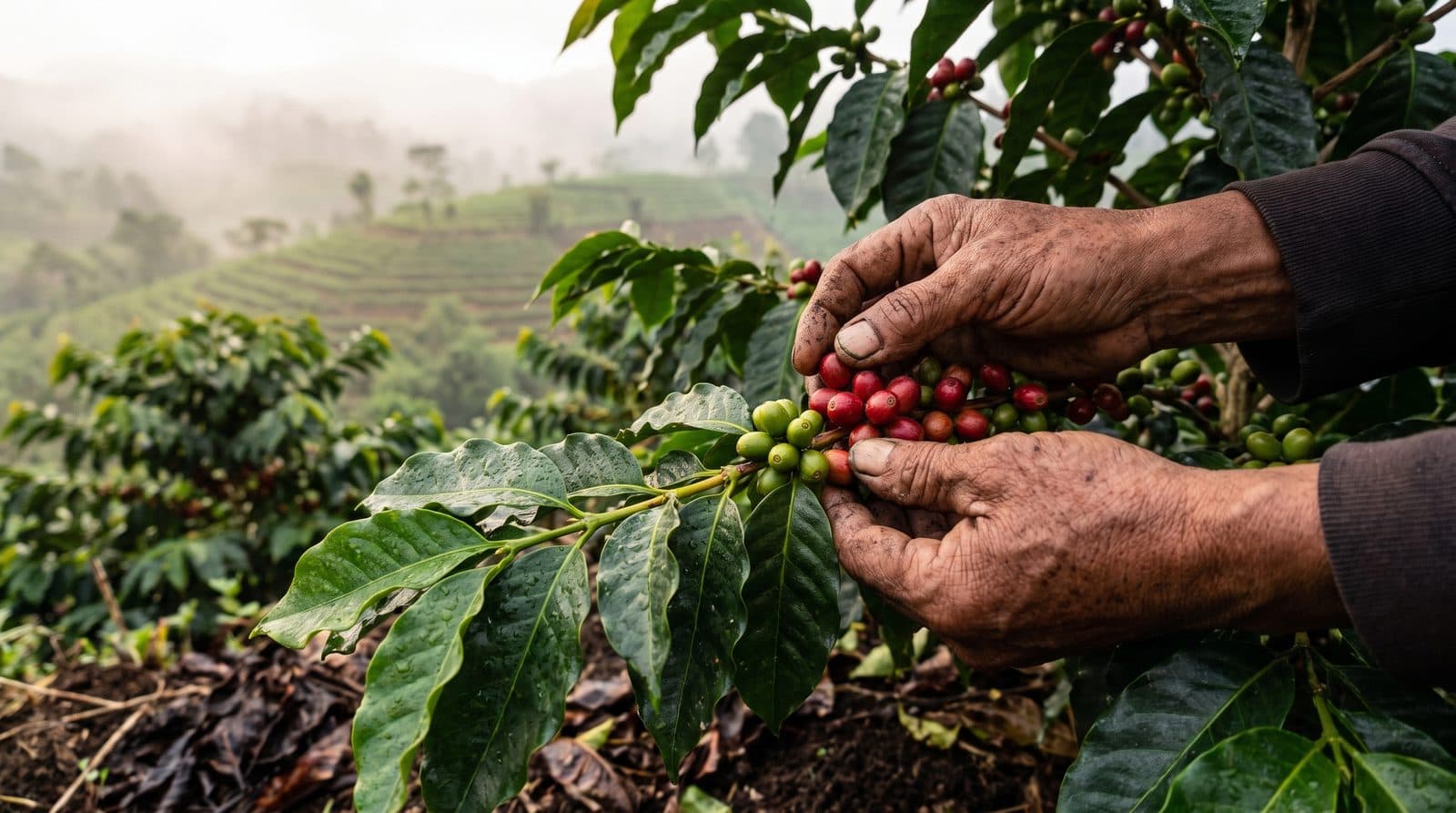
Coffee (Coffea arabica and Coffea robusta) is a perennial that rewards patient, soil-first care. Unlike fast-growing vegetables, a coffee tree builds its yield potential over several seasons. So feeding it well is less about chasing quick flushes of growth and more about steadily improving the soil it lives in. After years of tending coffee on smallholder plots, I keep coming back to the same lesson: the inputs that look least dramatic in the bag often do the most over time.
Organic fertilizers suit coffee especially well. They release nutrients slowly, feed the soil microbes that make those nutrients available, and help the ground hold moisture through the dry spell that triggers flowering. This guide walks through how to feed coffee organically across its key stages, from young seedlings to mature, fruit-bearing trees.
Understand What Coffee Needs
Coffee is a moderately heavy feeder whose priorities shift through the year. Getting the balance right matters far more than simply adding more fertilizer.
- Nitrogen (N) drives leaf and shoot growth. Coffee needs the most nitrogen during the vegetative flush after the rains begin.
- Phosphorus (P) supports root development and flower formation, and becomes especially important as the tree approaches its flowering window.
- Potassium (K) is critical during cherry development and ripening; it improves bean filling and overall fruit quality.
- Calcium, magnesium, and micronutrients (boron, zinc, iron) help prevent flower drop and leaf problems. These are often the hidden limiters in tired, long-cropped soils.
Coffee also prefers slightly acidic soil, roughly pH 5.5 to 6.5, that is rich in organic matter. In my experience, most problems growers blame on "not enough fertilizer" trace back to something else: compacted, low-organic soil that locks nutrients away before the roots can reach them.
Build the Soil Before You Feed the Plant
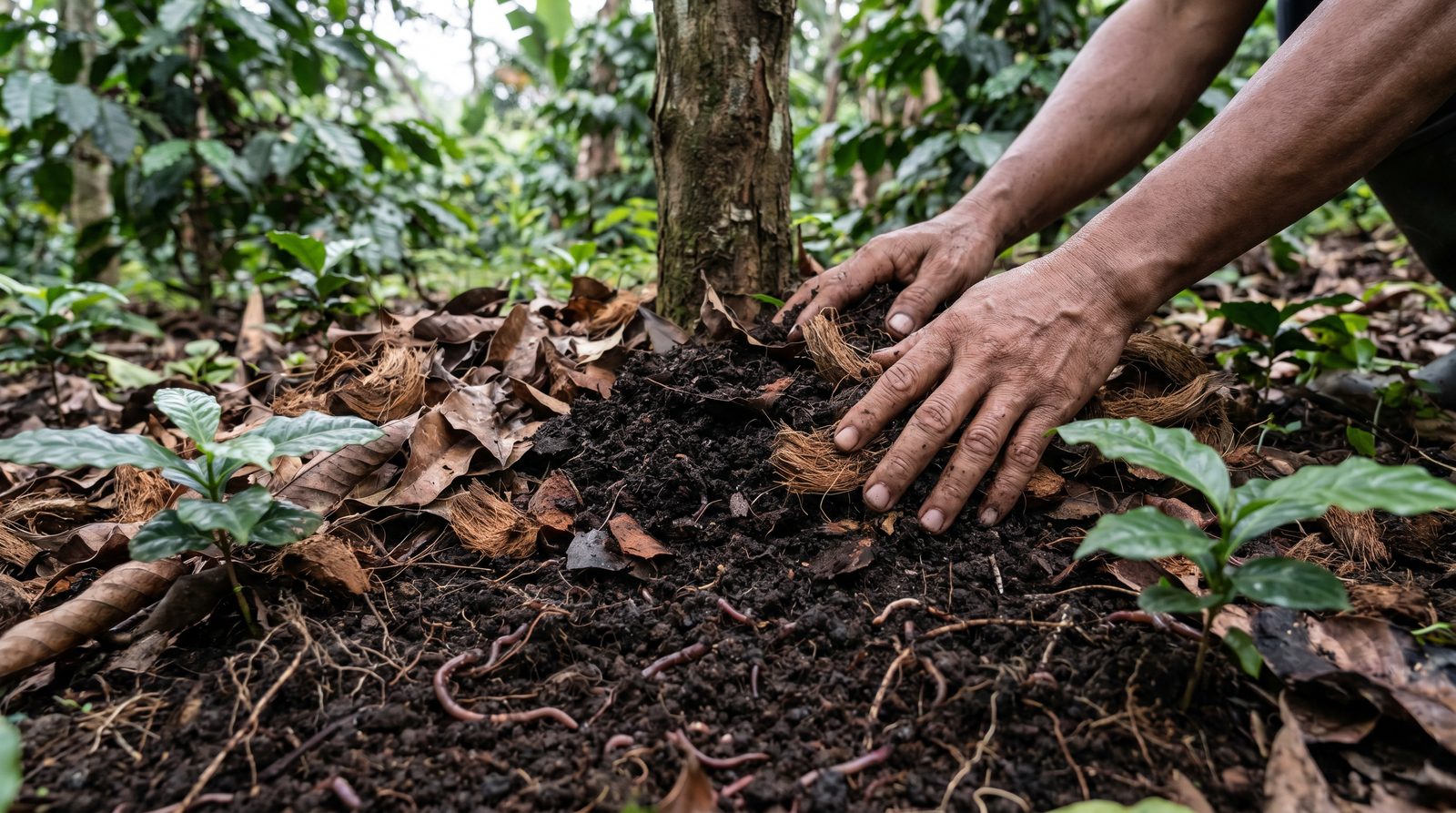
Healthy coffee starts with living soil. Before reaching for any concentrated input, work toward ground that is full of organic matter and active microbial life.
- Apply well-rotted compost or aged manure around the drip line twice a year, ideally at the start and end of the rainy season, so it integrates while the soil is moist.
- Keep a steady mulch layer of leaf litter, coffee husks, or pruned material over the root zone. As a general guide, a few centimetres is enough to protect roots, conserve moisture, and slowly feed the soil as it breaks down.
For a balanced organic base across the whole plot, a general-purpose soil amendment such as Alitura's Reserve works well to build fertility gradually and keep the soil biologically active. Spread it around the root zone and water it in, letting it work alongside your compost and mulch rather than replacing them.
If your plot has been cropped hard for years and feels "tired," it is usually short on minerals as much as nutrients. This is where a slow remineraliser like Volcanic Rock Dust earns its place: worked into the root zone, it releases a broad spread of trace minerals over time and rebuilds the mineral bank that flowering and cherry filling later draw on.
Feed for Flowering and Cherry Development
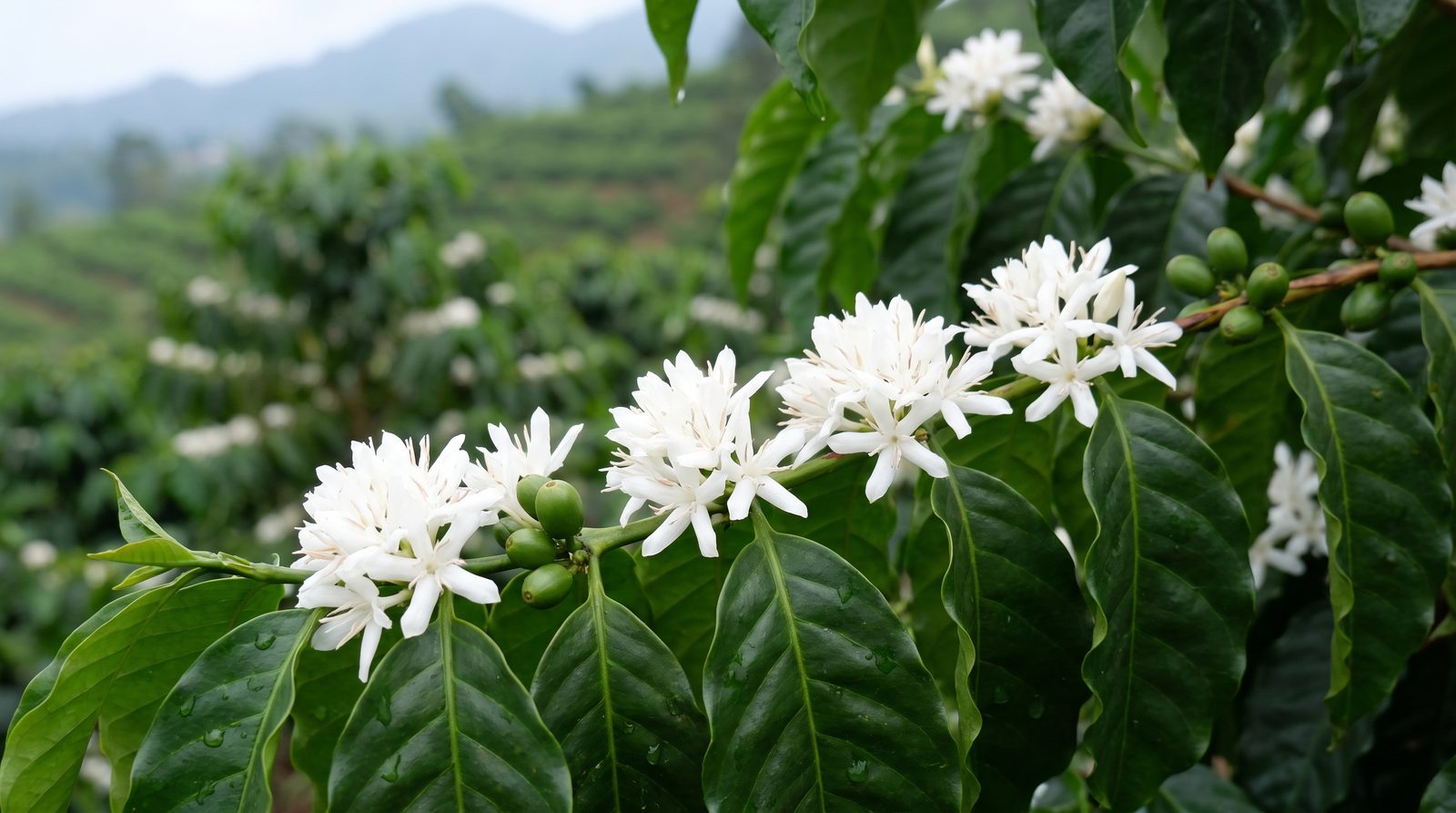
The flowering and fruiting stages are where targeted feeding pays off most. Once flowering is triggered, the tree draws heavily on phosphorus and potassium to set and fill its cherries.
A high-phosphorus organic input is valuable here. Seabird Guano is a strong natural source of phosphorus, well suited to supporting flower formation and early fruit set. Apply it lightly around the root zone a few weeks before the expected flowering flush, and resist the urge to overdo it; concentrated guanos are potent, and more is not better. Always water thoroughly after applying. Bat Guano is a good alternative phosphorus source if that is what you have on hand, used in the same restrained way.
As cherries develop and begin to ripen, shift the emphasis toward potassium and steady, balanced nutrition. For coffee specifically, a crop-matched organic blend such as Herbs & Spices Special Mix Organic Fertilizer supports this stage well, applied according to the tree's size and age. Keep combining it with your ongoing compost and mulch routine for the most reliable results.
A few hard-won tips for this phase:
- Feed in several smaller doses rather than one heavy application. Coffee responds better to steady availability than to a single large hit.
- Always apply to moist soil and water in, never onto bone-dry ground.
- Read the leaves. Pale new growth points to more nitrogen; weak fruit set points to gaps in phosphorus, potassium, or micronutrients.
Match Feeding to the Season
Timing your inputs to the tree's natural rhythm is one of the highest-impact things you can do, and it costs nothing extra.
- After the dry season, as the rains start: emphasise nitrogen-rich compost and a balanced amendment to fuel the vegetative flush.
- Pre-flowering: introduce a phosphorus source to support flower formation.
- Cherry development to ripening: prioritise potassium and balanced nutrition, and ease off nitrogen, which pushes leaves at the expense of fruit.
- After harvest: feed lightly to help the tree recover and rebuild reserves for the next cycle.
Common Mistakes to Avoid
Over-fertilising is as harmful as under-feeding. Excess nitrogen produces lush leaves but fewer cherries, and can leave plants more prone to disease. Applying concentrated inputs to dry soil risks burning the roots. And ignoring soil pH or organic matter means even good fertilizer underperforms.
Above all, be patient. Organic feeding rewards consistency over seasons. The soil you improve this year keeps paying you back, in healthier trees and better harvests, for years to come.
Frequently asked questions
Align feeding with the plant's cycle: nitrogen-rich inputs at the start of the rains for vegetative growth, phosphorus before flowering, potassium during cherry development, and a light feeding after harvest to aid recovery. Always apply to moist soil.
Use concentrated inputs like Seabird Guano sparingly on young plants, as they can be potent. Focus seedlings on compost and a balanced amendment first, and reserve heavier phosphorus feeding for plants approaching flowering age.
This usually signals too much nitrogen relative to phosphorus and potassium. Ease off nitrogen-rich inputs, support flowering with a phosphorus source before the flowering window, and ensure potassium during fruit development.
Rather than one large dose, feed in several smaller applications spread across the season, timed to vegetative growth, flowering, and fruiting. Build the soil with compost and mulch twice a year as a foundation.
Related products

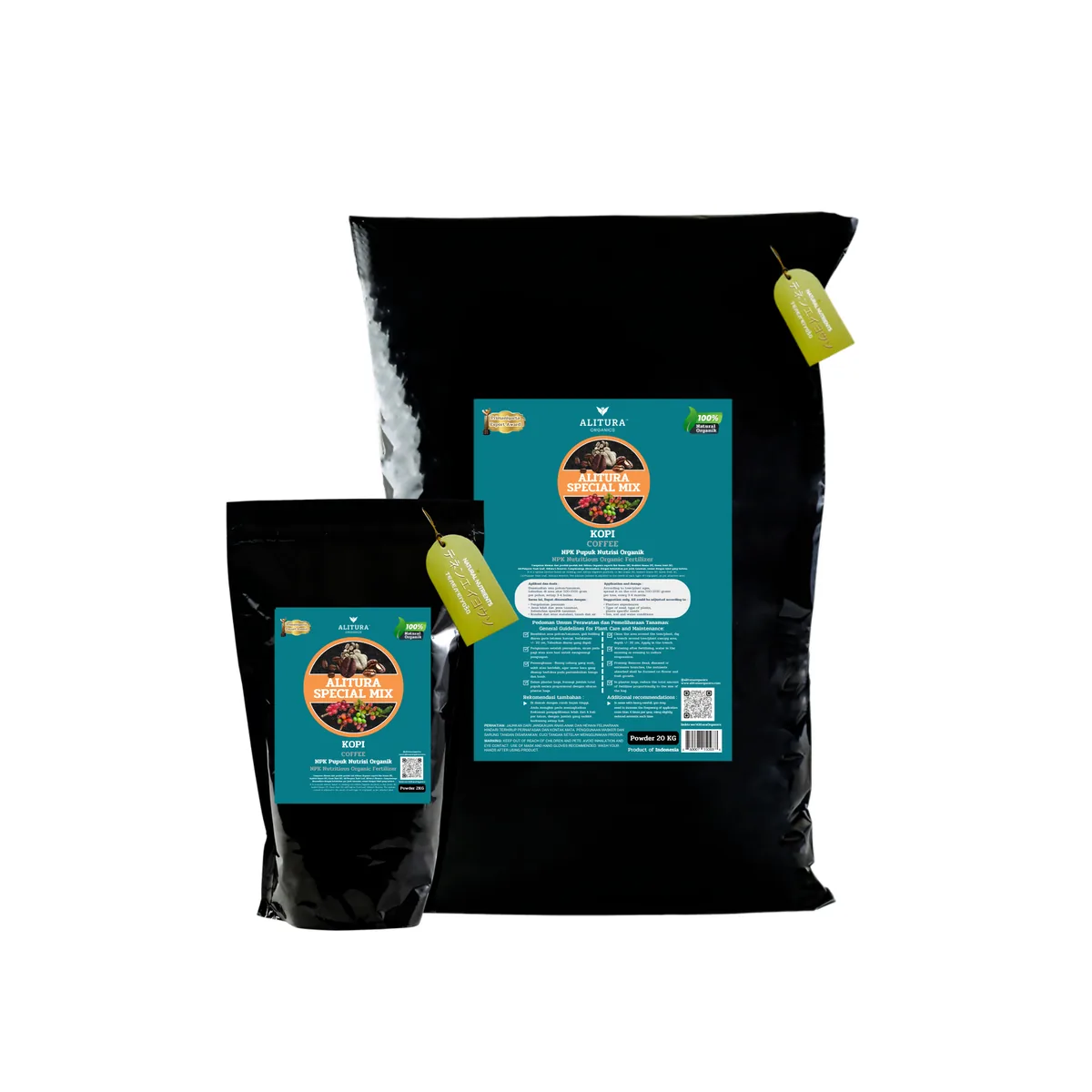
Coffee Special Mix
Special organic blend formulated for plantation crop growth and crop quality.
From IDR 28.000 / Kg(Packaging 20Kg)

Alitura's Reserve
Most Balanced NPK 5-5-5 Organic Nutritional Fertilizer
From IDR 28.000 / Kg(Packaging 20Kg)

Seabird Guano
Natural Source of Phosphorus
From IDR 27.000 / Kg(Packaging 20Kg)
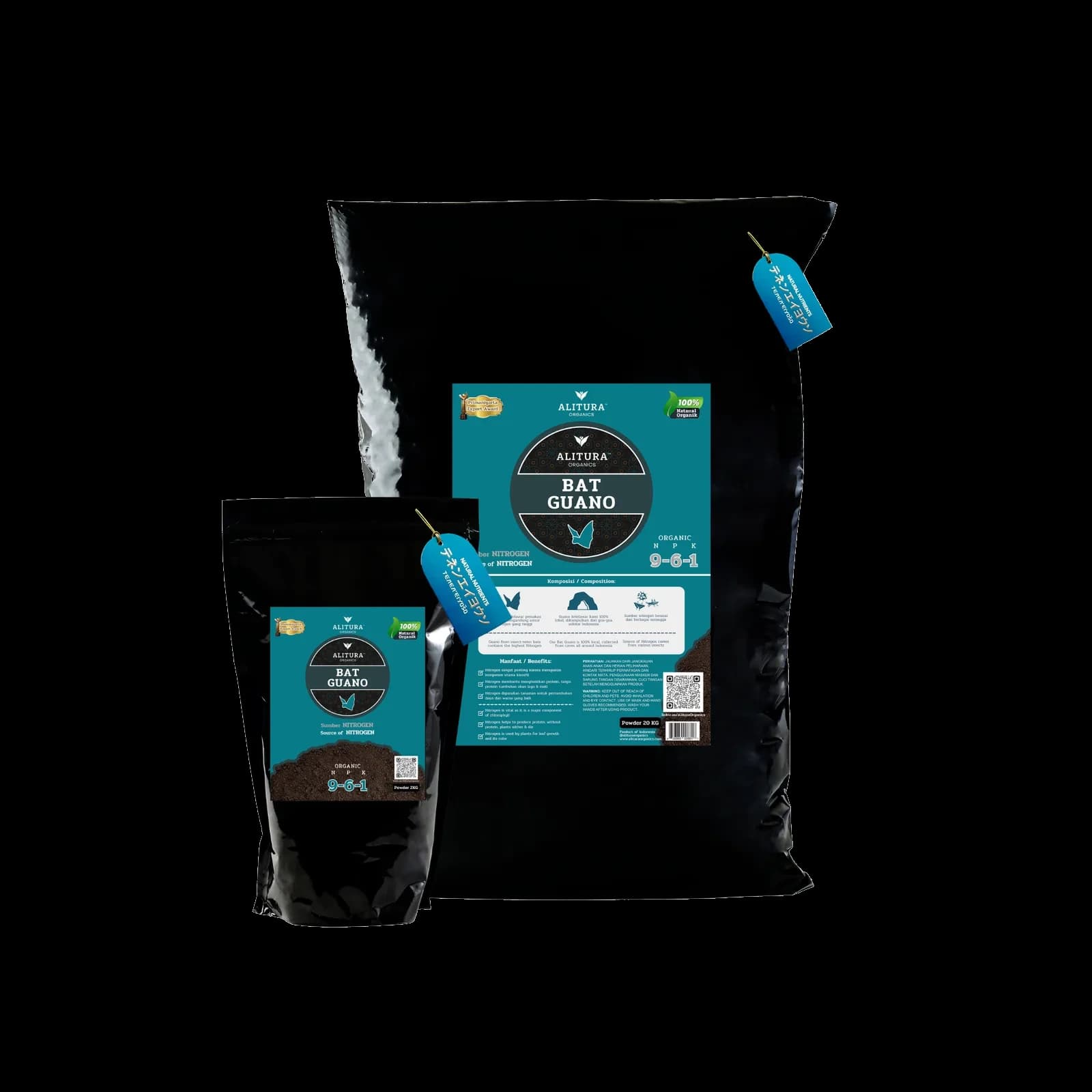
Bat Guano
Natural Source of Nitrogen and Phosphorus
From IDR 28.000 / Kg(Packaging 20Kg)

Volcanic Rock Dust
Provides Micronutrients
From IDR 27.000 / Kg(Packaging 20Kg)