Establishment
Seedling to successful transplant recoveryRoots, transplant recovery, gentle nutrition
Establish Watermelon with gentle, even fertility and a moist but aerated root zone. Strong roots now support the entire harvest period.

Crop growing guide
Citrullus lanatus
A warm-season cucurbit needing fast early vines, reliable pollination, even fruit-fill moisture, and potassium without late excess nitrogen.
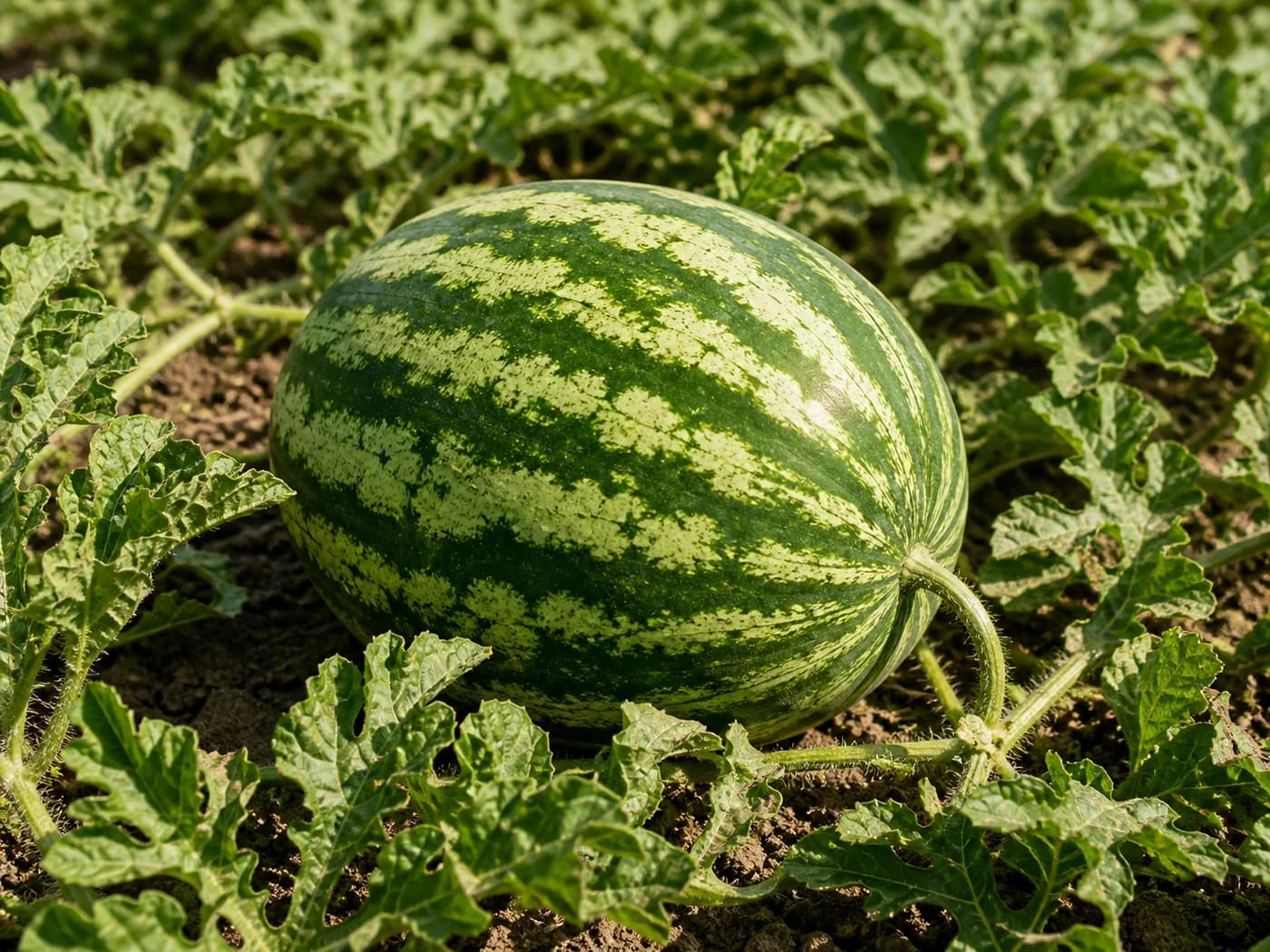
Watermelon (Citrullus lanatus) develops a wide vine and shallow roots before shifting rapidly into fruit growth. Bee activity, steady water after set, and healthy leaves determine sugar accumulation, while excess water or nitrogen near maturity can dilute quality and delay harvest.
For practical cultivation, Watermelon needs its light, water, root-zone aeration, and nutrition managed as one system. The guidance below organizes those needs by growth stage; final field or container rates should follow the product label, plant size, local conditions, and soil or media analysis.
Roots, transplant recovery, gentle nutrition
Establish Watermelon with gentle, even fertility and a moist but aerated root zone. Strong roots now support the entire harvest period.
Balanced canopy, branching, root expansion
Feed Watermelon in small, regular amounts so the canopy grows without becoming excessively soft or dense.
Phosphorus, potassium, calcium, stable water
Keep nutrition and irrigation steady while Watermelon flowers. Avoid heavy nitrogen that favors leaves over reproductive growth.
Potassium, steady uptake, crop replacement
Replace nutrients gradually as Watermelon develops and sheds harvestable fruit. Consistency is safer than a large corrective dose.
Match each product to the crop stage and root zone. Final rates should follow the product label, soil condition, and local agronomic advice.

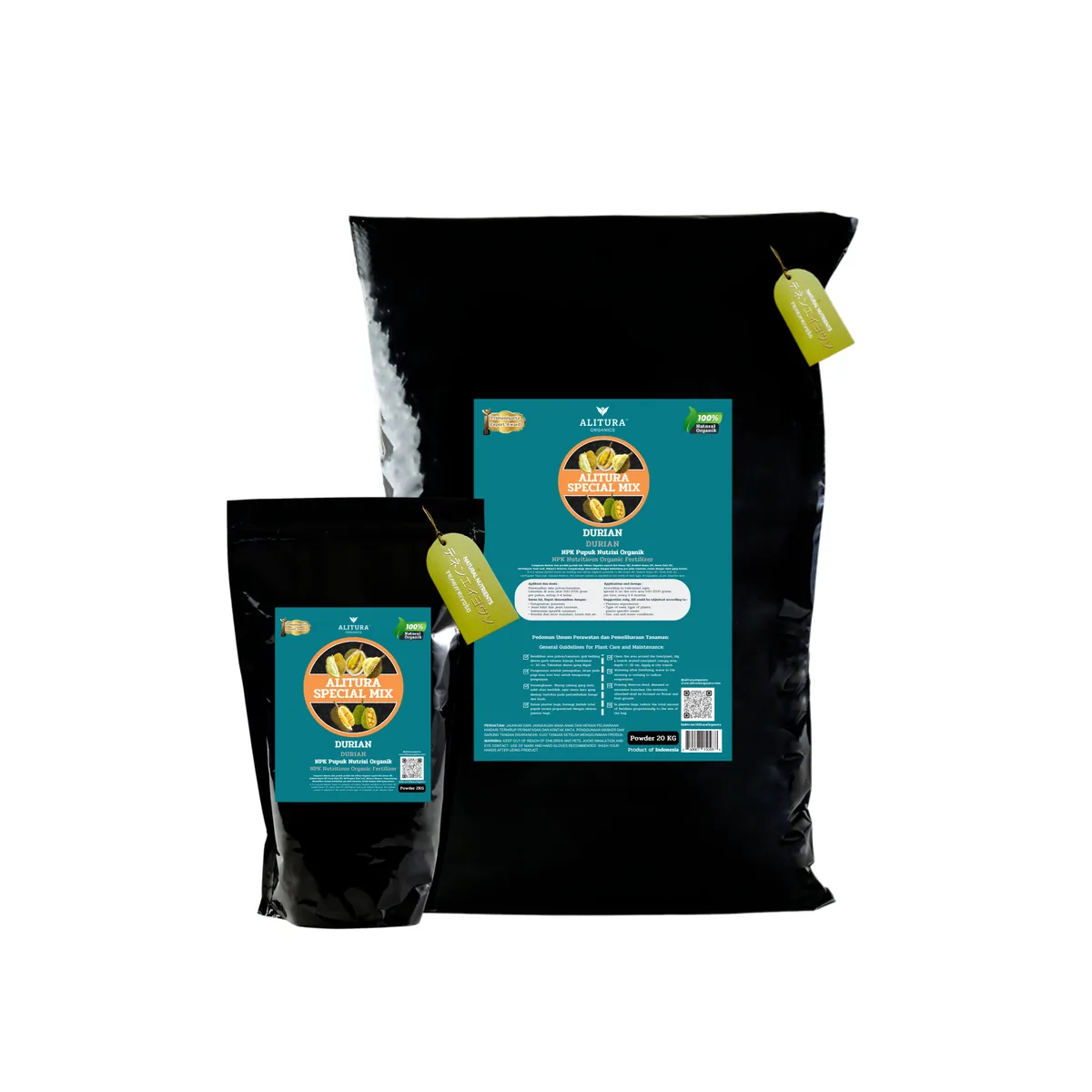
Special organic blend formulated for fruit plant growth and crop quality.
From IDR 28.000 / Kg(Packaging 20Kg)
Recommended for
Flowering and set · Fruit development and repeat harvest
Durian Special Mix organic nutrition can support Watermelon when its use follows crop stage, soil condition, and the product label.
Introduce during active growth and the higher-demand stages listed above; avoid a large corrective dose close to harvest or dormancy.
Apply to moist soil around the active Watermelon root zone, keep material away from stems or crowns, water in, and adjust the amount to plant size and field or container conditions.
Apply around the active root zone or mix into the planting media according to the package label, then water lightly. Adjust the amount to plant size, soil condition, and crop stage.
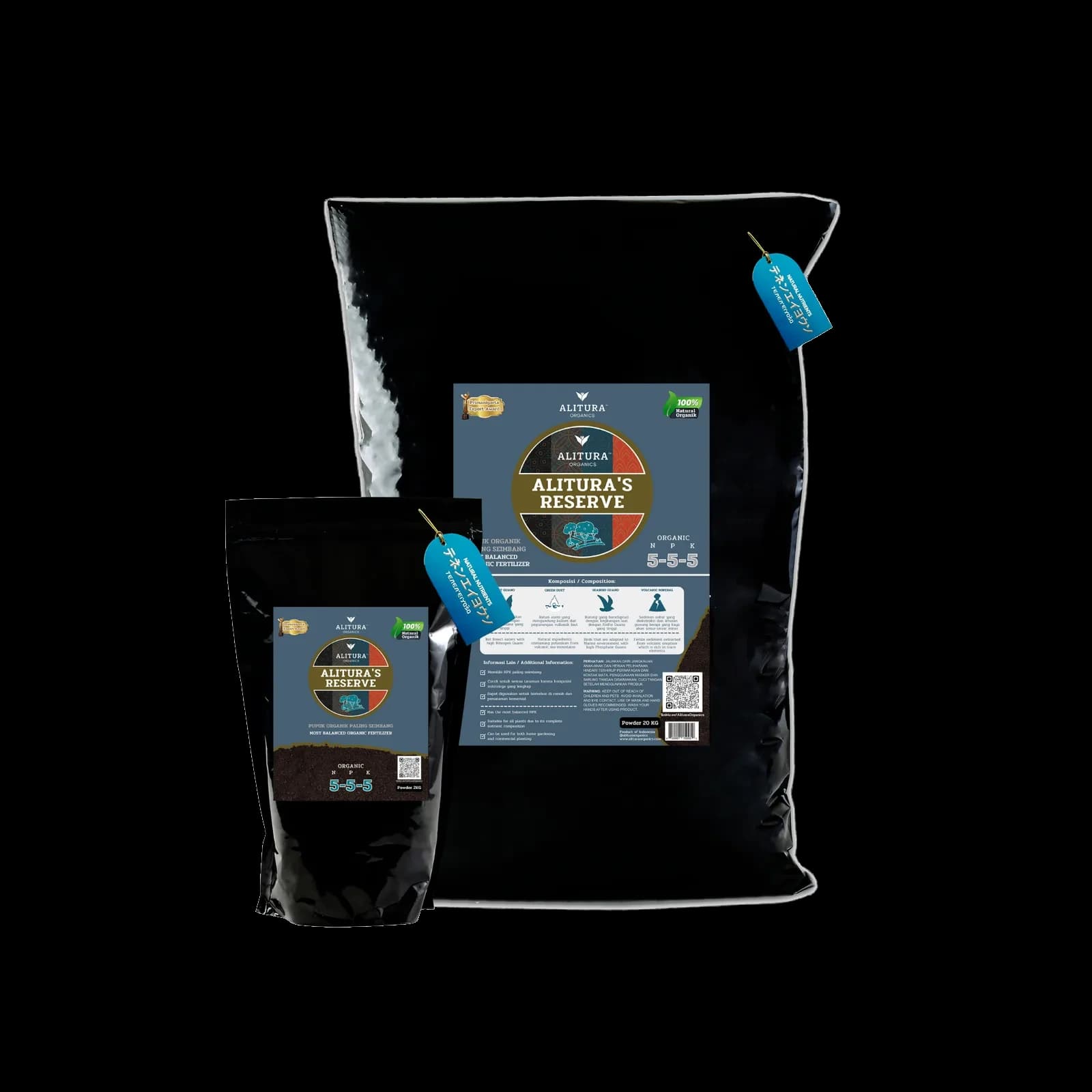
Most Balanced NPK 5-5-5 Organic Nutritional Fertilizer
From IDR 28.000 / Kg(Packaging 20Kg)
Recommended for
Establishment · Vegetative growth
balanced soil-building organic nutrition provides a defensible foundation for Watermelon without replacing soil or leaf analysis.
Use during soil preparation, establishment, or recovery, then reassess before the next growth stage.
Spread evenly through the cultivated root zone or media, mix lightly where appropriate, and never pile fertilizer against Watermelon.
Use Alitura's Reserve as a base feed at planting and as a top-up through the growing season. As a general guide, work a small handful into the soil around each plant or mix it into potting media before planting, then reapply every 4 to 6 weeks during active growth. For garden beds, broadcast evenly over the soil surface and lightly incorporate, then water in well. Powder works best mixed into soil or media. Always water after applying and adjust the amount to plant size and soil condition.