
Choosing the Right Growing Media for Potted and Container Plants

By George Vie
Published 2026-06-30
A grower's practical guide to drainage, aeration, and coco-based growing media so your potted plants build strong, healthy roots.
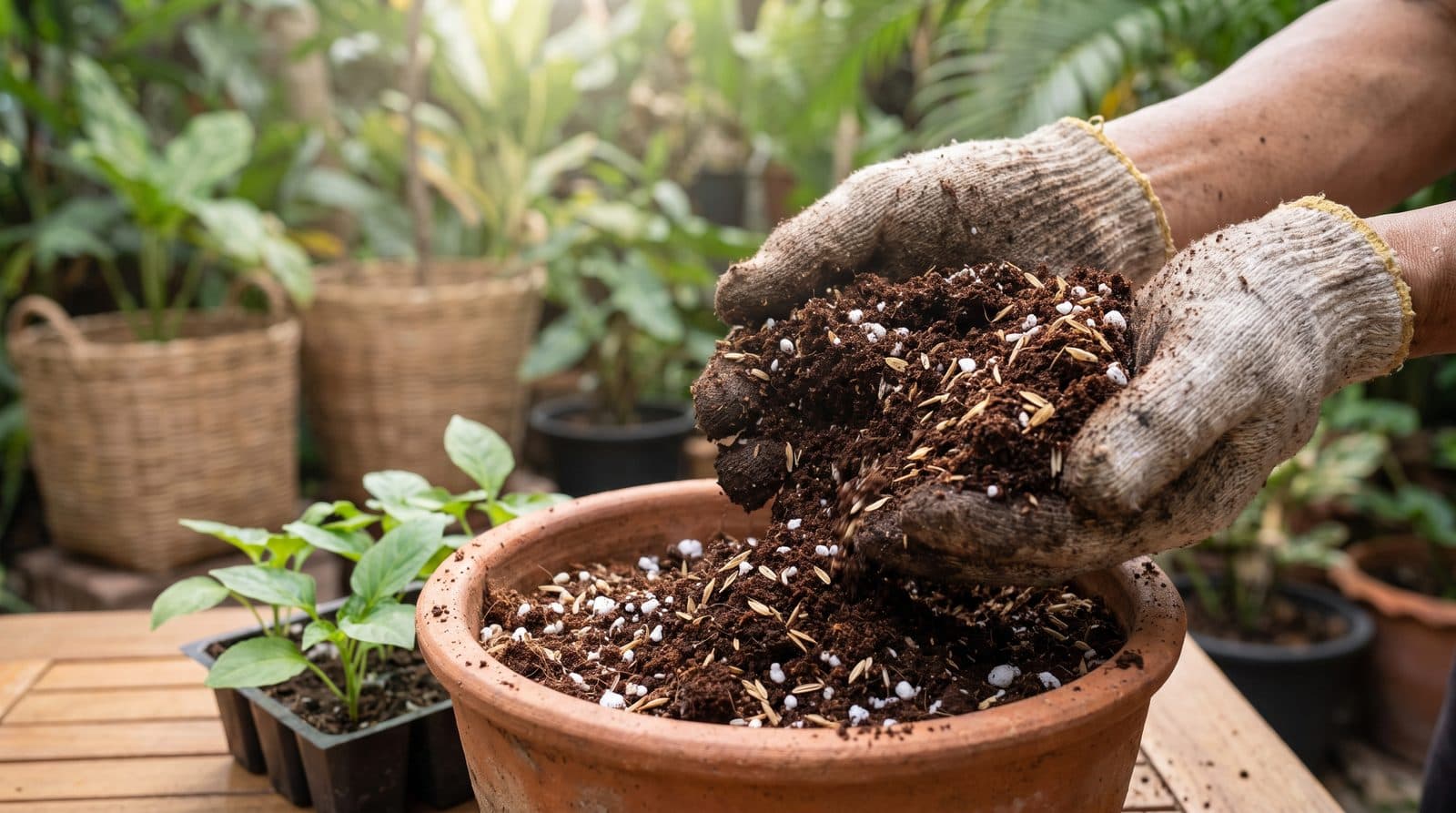
A plant in a pot lives in a much smaller world than a plant in open ground. Its roots cannot wander off to find water, air, or nutrients, so the handful of media you give it has to do every job at once. After years of growing in containers, I have learned that this is the decision that quietly makes or breaks everything else. Get the media right and the rest of your care gets easier. Get it wrong and you spend the whole season fighting root rot, wilting, and stunted growth.
This guide walks through what makes a good container mix, why drainage and aeration matter so much, and where coco-based media fits in.
Why Garden Soil Fails in Pots
Scooping soil straight from the garden into a pot is tempting, but field soil rarely behaves well once it is confined. In the ground, water drains down through a deep profile. Inside a pot, that same soil settles, compacts, and holds a sodden layer near the bottom that squeezes air out of the root zone.
Roots need oxygen as much as they need water. When the pores stay flooded, roots effectively drown and become easy targets for rot fungi. That is why a purpose-built growing media, lighter and more porous than topsoil, almost always outperforms raw garden dirt in containers.
A good potting media has to balance three jobs at the same time:
- Holds water long enough between waterings that the plant does not dry out.
- Drains the excess quickly so roots are never sitting in a swamp.
- Holds air in the spaces between particles so roots can breathe.
Drainage and Aeration: The Two Pillars
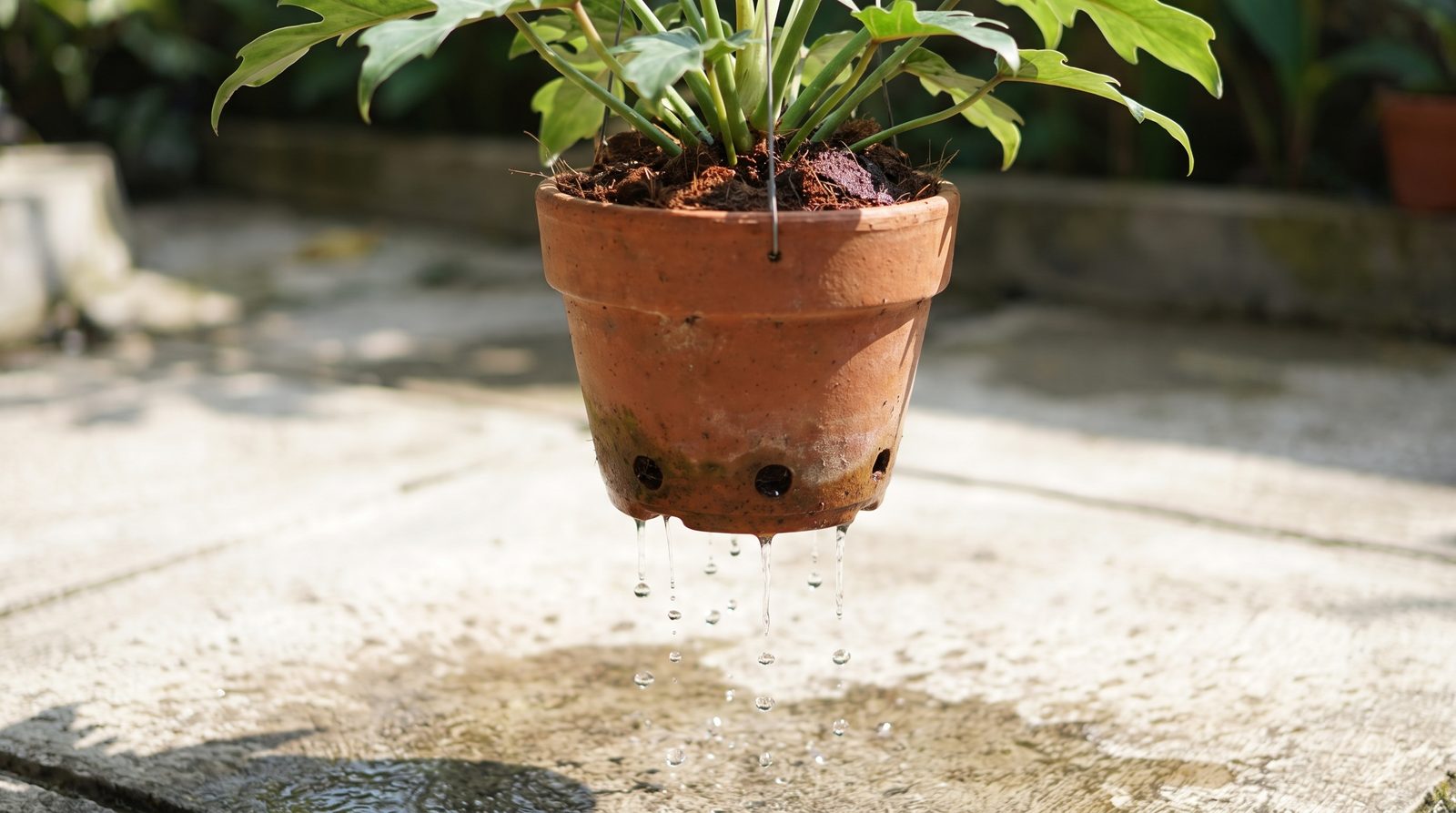
Drainage and aeration work as a pair. When you water, gravity pulls the excess out through the drainage holes, and air refills the empty pore spaces behind it. A media made only of fine particles grips water tightly and leaves almost no room for air. A media with some coarse, chunky material builds larger pores that drain fast and stay airy.
You can read drainage with your own hands, no equipment needed. Water thoroughly, and water should run freely from the bottom within a few seconds while the surface drains rather than staying soggy for days. If the top stays wet and heavy a day later, the mix is too dense.
Practical ways to improve drainage and aeration:
- Add coarse material such as rice husk (raw or carbonized), perlite, pumice, or coarse sand to open up a dense mix.
- Always use pots with drainage holes. No media, however good, can save a sealed container.
- Do not pack the media down hard when filling a pot, because compaction collapses the air spaces you just built in.
- Match the pot to the plant. An oversized pot holds a big reservoir of wet media that dries slowly and stays cold.
A ready-blended container media such as Alitura's Growing Media is formulated around this balance, pairing moisture-holding organic matter with enough structure to let water move through and air stay in. It is a reliable shortcut if you would rather not source and blend every component yourself.
Where Coco-Based Media Fits
Coco coir, made from the husk of the coconut, has become a favorite base for container growing, and deservedly so. It holds a generous amount of water while still draining freely, resists compaction better than peat, and breaks down slowly so it keeps its open structure for a long time. It is also a renewable byproduct of an existing harvest, which makes it a sound fit for organic growers.
Coir comes in different grades. Fine coco peat holds the most water, while chunky coco chips add air and drainage. A quality product like Premium Coco Media is typically washed and buffered so excess salts and tannins are reduced. That step matters: raw, unwashed coir can lock up calcium and magnesium and carry sodium that stresses young roots before they ever get going.
A few things to keep in mind with coir:
- On its own it is low in nutrients, so it needs feeding. Pair it with compost, worm castings, or an organic fertilizer.
- It can hold a lot of water, so check moisture before watering instead of watering on a fixed schedule.
- Blending coir with compost and a coarse aerator gives you a living, well-rounded media rather than an inert one.
Building and Feeding Your Mix
A dependable all-round container recipe is roughly equal parts moisture-holding material (coco or compost), structure and drainage (rice husk, perlite, or pumice), and nutrient-rich organic matter (well-finished compost or worm castings). Then adjust the ratio to the plant rather than treating one mix as universal:
- Succulents and cacti want a grittier, faster-draining blend, with more pumice or coarse sand and less water-holding coir. A purpose-made mix like Succulent Special Mix takes the guesswork out of this.
- Herbs and spices like steady moisture but hate wet feet, so a balanced mix such as Herbs & Spices Special Mix Organic Fertilizer suits them well.
- Decorative foliage and leafy plants generally prefer more moisture retention, the territory a mix like Decorative Plants Special Mix is built for.
Because container media drains with every watering, nutrients leach away faster than they do in the ground. Feed little and often with a gentle organic fertilizer rather than one heavy dose, and refresh the top layer of media or repot when growth slows and roots start to circle the inside of the pot.
Finally, watch the plant, not the calendar. Lift the pot to feel its weight, push a finger into the media, and water only when the top few centimeters feel dry. Healthy roots, honest drainage, and steady feeding will carry your potted plants further than any single product ever could.
Frequently asked questions
It is best avoided on its own. Garden soil compacts inside a pot, drains poorly, and pushes air out of the root zone. A lighter, more porous growing media drains better and lets roots breathe. If you must use garden soil, blend it with compost and a coarse aerator like rice husk or perlite.
Water the pot thoroughly. If water runs freely from the drainage holes within a few seconds and the surface is not soggy a day later, drainage is good. If the top stays wet and heavy, the mix is too dense and needs coarse material added.
Yes. Coco coir holds water and gives great structure but is naturally low in nutrients. Combine it with compost, worm castings, or a gentle organic fertilizer, and feed regularly because container media leaches nutrients faster than open ground.
Water by checking the media, not a fixed schedule. Push a finger a few centimeters into the mix and water only when it feels dry. Coco-based media can hold a lot of moisture, so overwatering is a common cause of root problems.
Related products
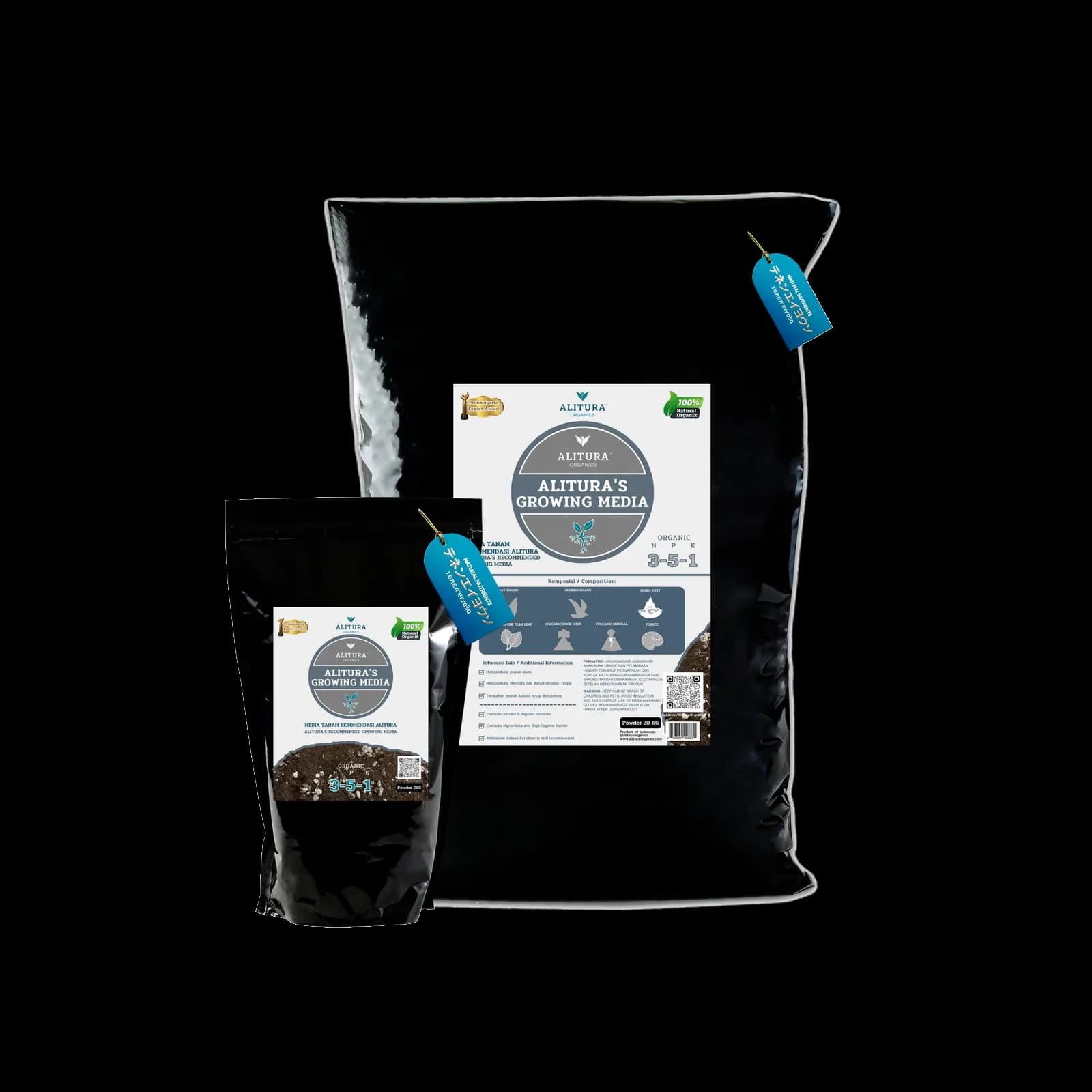
Alitura's Growing Media
Alitura's Recommended Growing Media
From IDR 28.000 / Kg(Packaging 20Kg)
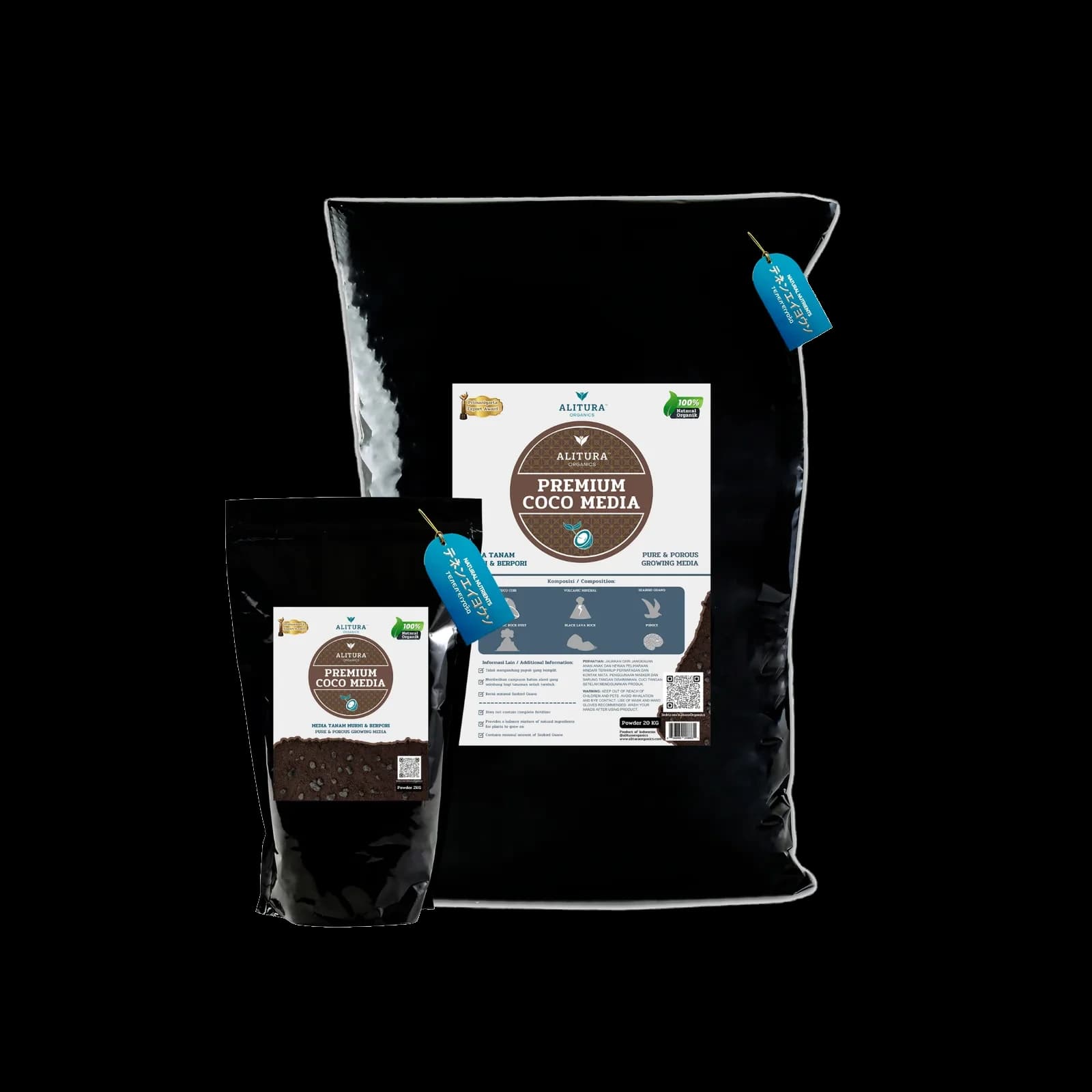
Premium Coco Media
Pure & Porous Growing Media
From IDR 26.000 / Kg(Packaging 20Kg)
Aloe Vera Special Mix
Special organic blend formulated for decorative plant growth and crop quality.
From IDR 28.000 / Kg(Packaging 20Kg)
Monstera Special Mix
Special organic blend formulated for decorative plant growth and crop quality.
From IDR 28.000 / Kg(Packaging 20Kg)
Ginseng Special Mix
Special organic blend formulated for herb and spice plant growth and crop quality.
From IDR 28.000 / Kg(Packaging 20Kg)